Leave Your Message
The rapid expansion of the Internet of Things (IoT) has fundamentally transformed the electronics manufacturing landscape. From smart home sensors, wearable health trackers, and smart utility meters to complex industrial IoT (IIoT) edge gateways, the demand for highly compact, energy-efficient, and reliable Printed Circuit Board Assemblies (PCBAs) is at an all-time high. To achieve the compact form factors required by modern IoT devices, design engineers increasingly specify ultra-miniature surface mount devices (SMDs), such as 0201 and 01005 passive components, alongside high-density ball grid arrays (BGAs) and chip-scale packages (CSPs).
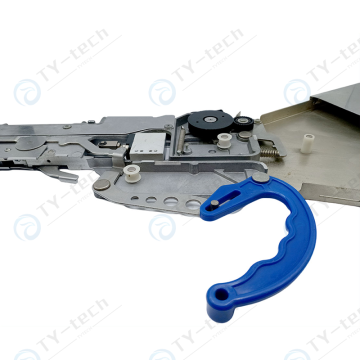
As a result, Surface Mount Technology (SMT) assembly lines must operate at unprecedented levels of precision and reliability. Within this high-speed production environment, the SMT feeder serves as the critical gateway, delivering components from carrier tapes to the pick-and-place nozzle with micrometer-level accuracy. Even minor disruptions in the feeder's mechanism—particularly the feeder cover, shutter, or tension springs—can lead to component mispicks, tombstoning, carrier tape jams, and ultimately, costly emergency line shutdowns. In the context of IoT smart device PCB line emergency maintenance, understanding the mechanical integrity of feeder covers and their associated securing components is paramount to maintaining high first-pass yield (FPY) and minimizing operational downtime.
Key Takeaway: High-mix, high-density IoT PCB assembly leaves no margin for error. A worn or misaligned feeder cover can degrade pickup rates, trigger vision alignment errors, and halt an entire production line within seconds.
In modern electronic manufacturing services (EMS) facilities, profitability is directly tied to Overall Equipment Effectiveness (OEE). SMT lines represent massive capital investments, and any unscheduled stoppage can cost companies thousands of dollars per hour. Feeder covers, also known as pressure caps or shutter guides, are critical components that physically compress the carrier tape, exposing the component cavities sequentially so the mounter nozzle can execute high-speed pickup cycles.
Currently, the market demands feeder covers that exhibit exceptional wear resistance, precise dimensional stability, and robust electrostatic discharge (ESD) protective properties. IoT devices often incorporate highly sensitive RF modules, microcontrollers, and sensor chips that are susceptible to ESD damage. Consequently, feeder covers must be fabricated from specialized anti-static polymers or treated alloys to prevent static charge buildup during the high-speed peeling of the cover tape. Furthermore, as manufacturers transition to lead-free and halogen-free assemblies, the physical demands on SMT components and their handling systems have escalated, making high-precision replacement parts indispensable for routine and emergency maintenance alike.
Emergency maintenance on an SMT line is a high-pressure scenario where technicians must diagnose and resolve mechanical failures rapidly. In IoT PCB production, several specific scenarios highlight the critical role of feeder covers and their locking mechanisms:
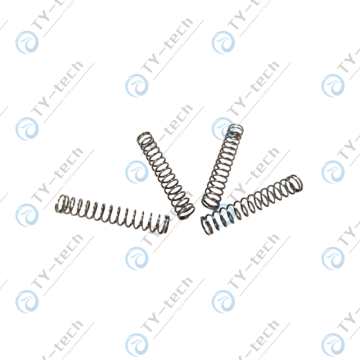
Smart home devices, such as smart speakers and security hubs, require high-volume manufacturing. SMT mounters operate at speeds exceeding 100,000 components per hour (CPH). Under these extreme speeds, the mechanical vibrations transferred through the feeder bank are substantial. If the feeder cover's front buckle or tension spring (such as the KHJ-MC147-02 Spring for ZS8mm feeders) loses its elasticity, the feeder cover can vibrate loose. This slight displacement causes the carrier tape to flutter, leading to misaligned components, nozzle damage, and immediate machine stoppage. Emergency maintenance teams must quickly replace these springs to restore the required locking tension.
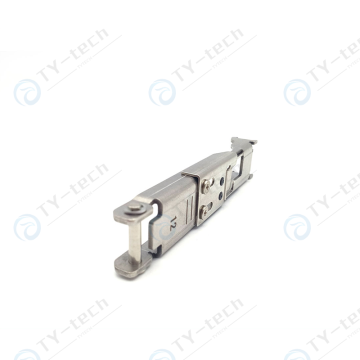
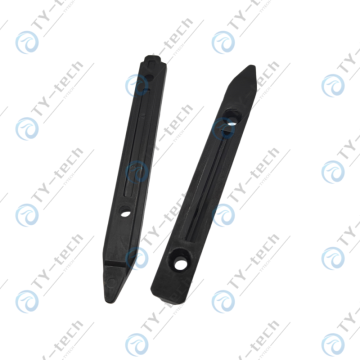
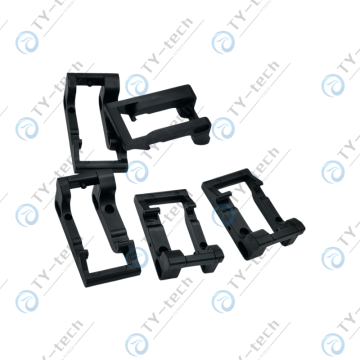
Wearable devices, such as smartwatches and fitness trackers, rely on extremely dense PCBs populated with 01005 and 0201 components. The pockets of the carrier tapes for these components are microscopic. The feeder cover must compress the tape perfectly flat against the guide groove (such as the KHJ-MC104-00 Groove Guide) to prevent components from flipping or jumping out of their pockets prior to pickup. A worn feeder cover surface or a loose front buckle (such as the KHJ-MC245-00 Front Buckle) will fail to maintain uniform pressure, causing high component loss rates. During emergency maintenance, replacing the worn cover and buckle is the only way to restore the micro-component picking rate.
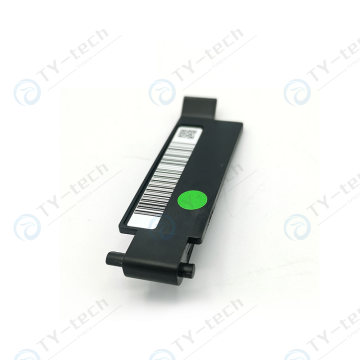
Industrial IoT gateways often feature a high mix of components, including larger connectors and power management modules alongside small processors. This requires feeders of varying widths (8mm, 12mm, 16mm, and wider) to operate simultaneously. When transitioning between production runs or during mid-run failures, technicians must perform rapid swap-outs of feeder parts. Having modular, reliable replacement parts like the KHJ-MC26U-00 Tail Cover ensures that the rewind mechanism remains shielded and aligned, allowing for rapid deployment and minimal delay during changeovers.
As Industry 4.0 matures, SMT feeder systems are evolving from purely mechanical devices into smart, connected peripherals. This technological shift is characterized by several key trends:
To prevent emergency line stoppages, electronics manufacturers must implement strict maintenance protocols. Below is a structured troubleshooting guide for common feeder cover issues in IoT PCB lines:
Root Cause: Insufficient down-force from the feeder cover, often caused by fatigue in the front buckle spring or wear on the cover's underside.
Action: Inspect the tension spring (e.g., KHJ-MC147-02) and replace if the locking force is below specification. Verify that the cover is flat and free of groove wear.
Root Cause: Misalignment between the feeder cover and the guide groove, or a worn tail cover that fails to shield the rewind gear mechanism.
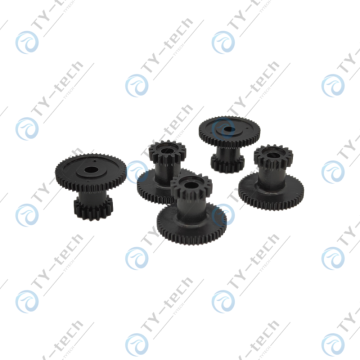
Action: Clean the guide groove (e.g., KHJ-MC104-00) to remove adhesive residue from the cover tape. Check the tail cover (e.g., KHJ-MC26U-00) and the idler gear (e.g., KHJ-MC253-00) for smooth torque transmission.
Root Cause: Excessive clearance between the feeder cover and the carrier tape, allowing components to rotate.
Action: Adjust the height settings of the feeder cover or replace the front buckle (e.g., KHJ-MC245-00) to ensure a tighter, more secure lock against the feeder body.
The successful manufacture of IoT smart devices depends on the flawless execution of high-speed SMT processes. While the pick-and-place machine itself is the centerpiece of the line, its performance is fundamentally limited by the reliability of its feeders. High-quality feeder covers, robust locking buckles, precision springs, and smooth-running gears are the unsung heroes of the SMT line. By investing in premium replacement parts and adhering to proactive maintenance schedules, manufacturers can drastically reduce emergency maintenance events, protect sensitive components from ESD and physical damage, and achieve the high-yield, continuous operation required to remain competitive in the fast-paced global IoT market.