

From Passive Detectors to Intelligent Guardians — The Sensor Technologies Powering Tomorrow's PCB Assembly
Introduction: The Unseen Nervous System of Modern Manufacturing
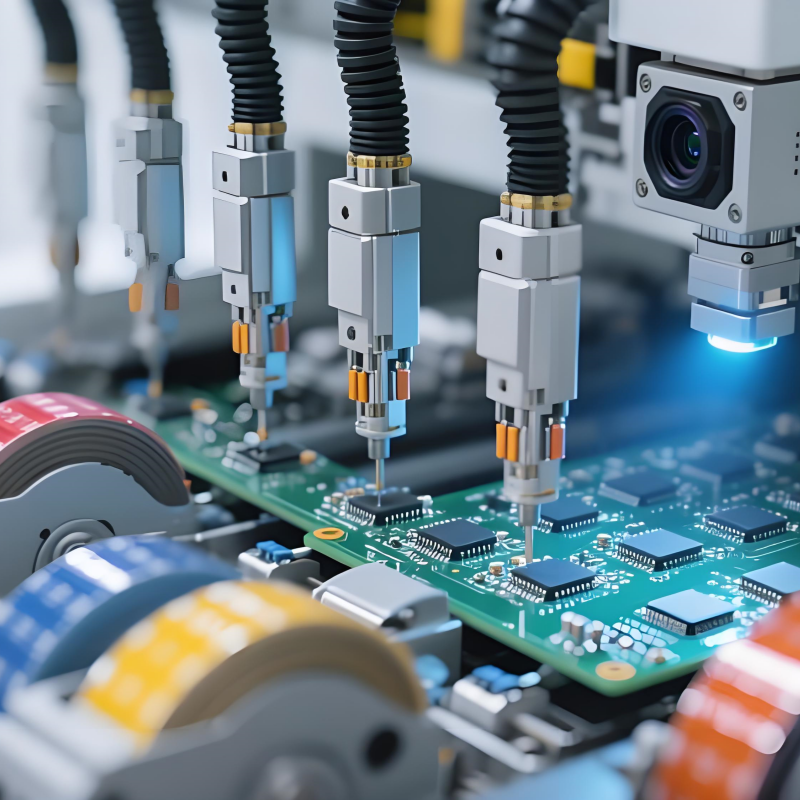
Step onto the floor of any high-volume electronics assembly facility, and you will witness a spectacle of mechanical precision. Pick-and-place machines dance across printed circuit boards at breathtaking speed, placing thousands of miniature components every hour with accuracy measured in microns. Robotic arms pivot, vacuum nozzles hiss, and conveyor belts glide boards from station to station in an unbroken flow of production.
Without SMT sensors, the modern surface-mount technology line would be blind, deaf, and paralyzed. A pick-and-place machine without sensors is like a surgeon without hands — capable of motion, but incapable of precision. The sensors transform raw mechanical movement into intelligent, adaptive, and self-correcting manufacturing.
The Sensor Ecosystem: Understanding the Types That Drive SMT Production
Modern SMT sensors encompass a remarkable diversity of technologies, each designed to address specific challenges in the pick-and-place process. Understanding this ecosystem is essential for anyone responsible for maintaining or optimizing an SMT production line.
Laser Sensors: The Precision Measurers
For Juki machines, laser recognition technology enables fast, accurate identification of various component shapes — from as small as 03015 to sizes up to 50 mm square — including BGA, SOP, and QFP packages. Juki's "Takumi Head" takes this further with an 8-nozzle design where the laser sensor height automatically adjusts based on the height of each component being placed, enabling optimal placement across an extraordinary range of component sizes.
Photoelectric Sensors: The Presence Detectors
The global SMD photoelectric sensor market reflects their growing importance. Valued at US$987 million in 2025, it is forecast to reach US$1,605 million by 2032, representing a compound annual growth rate of 7.3%.
Pressure Sensors: The Touch Sensitivity
Pressure sensors are the sense of touch in the SMT line. They monitor the force applied during component placement, ensuring that delicate components are not crushed by excessive pressure while maintaining sufficient force for reliable attachment.
Yamaha's 1-Stop Smart Solution exemplifies the sophistication of modern pressure sensing. The system tracks changes in force and measures component-placement force to within 0.1N resolution. Nozzle-tip force measurement enables early detection of issues like blockages, allowing timely nozzle maintenance and enhanced end-of-line production yield.
Image Sensors and Vision Systems
The global SMT vision system market was valued at US$950 million in 2025 and is projected to reach US$1,714 million by 2032 at a CAGR of 8.8%. These systems leverage industrial cameras, optical sensors, illumination modules, image processing software, and AI algorithms to capture and analyze images of PCBs, components, solder joints, and assembly processes in real time.
Position Sensors
Negative Pressure Sensors
The Expanding SMT Sensor Market: A Growth Story
SMT vision systems are experiencing even faster growth, with the market expected to expand from US$950 million in 2025 to US$1,714 million by 2032 at a CAGR of 8.8%.
Several factors are driving this expansion:
- Miniaturization: The relentless march toward smaller components — from 0402 to 0201 to the emerging 01005 (0.4×0.2mm) standard — demands ever-greater placement precision and sensor reliability. SMT sensors must detect and measure components that are barely visible to the naked eye.
- Automotive Electronics: The proliferation of electric vehicles and advanced driver-assistance systems has created unprecedented demand for high-reliability PCB assembly, where sensor accuracy directly impacts vehicle safety and performance.
- 5G and Telecommunications: 5G infrastructure requires dense, high-frequency circuit boards that push the limits of current SMT technology, demanding sensors with exceptional precision and speed.
- Industry 4.0 Integration: The integration of SMT sensors with IoT capabilities enables real-time data collection, predictive maintenance, and closed-loop process control. From 2025 to 2026, semiconductor packaging and testing lines, SMT placement lines, and precision assembly lines have entered a new expansion cycle.
Brand-by-Brand: How Leading Manufacturers Leverage Sensor Technology
Yamaha: Precision Through Intelligent Sensing
Yamaha SMT sensors form the intelligent core of its high‑performance modular placement platforms. The YSM20R and ultra‑high‑speed YSM40R models adopt the advanced on‑the‑fly multi‑recognition vision camera, which completes component alignment, height inspection and 3D coplanarity detection in one continuous scanning pass to cut cycle‑time loss. The YSM20R achieves placement accuracy of ±25μm and maximum mounting speeds up to 95,000 CPH, while YSM40R delivers industry‑leading throughput reaching 200,000 CPH for mass‑production applications.
Yamaha sensors for SMT production cover a comprehensive product portfolio, including airflow pressure sensors such as 532213010062 for nozzle vacuum monitoring, high‑precision photo‑sensors like KHY‑M652M‑00 for PCB conveyor position detection, and tape‑feed detection sensors KH5‑M3456‑30X / KG7‑M3456‑30X compatible with ZS‑series electric feeders across YS‑12, YSM10, YSM20 platforms.
The Yamaha Sigma‑G5S II placement machine provides a flexible, high‑mix PCB assembly solution for complex electronic manufacturing, where closed‑loop intelligent sensor technology stabilizes high‑speed, high‑precision component mounting and minimizes production downtime.
Panasonic: Multi-Recognition and Flow Sensing
Panasonic SMT sensors are at the heart of the company's advanced placement platforms. The NPM-D3 and NPM-D3A models integrate an industry-leading multi-recognition camera that combines alignment, thickness, and 3D coplanarity into a single time-saving operation. The NPM-D3A achieves placement accuracy of 30μm and speeds up to 92,000 CPH.
Panasonic sensors for SMT applications include flow sensors like the N510068516AA PFMV530F-1-N-X900 for the NPM H8 series, photo sensors like the N610071899AA, and tape detection sensors like the KXFA1PQ4A00 for CM402/CM602/NPM feeder connections.
The Panasonic AM100 placement machine offers a comprehensive solution for diverse PCB mounting needs, with sensor technology enabling flexible, high-mix production.
Juki: Laser Recognition Excellence
Juki SMT sensors are defined by the company's pioneering laser recognition technology. Juki's laser sensors enable fast, accurate identification of various component shapes — including BGA, SOP, and QFP — ranging from as small as 03015 to sizes up to 50 mm square.
The Juki "Takumi Head" with 8 nozzles automatically changes the laser sensor height according to the component being centered. This automatic adjustment enables optimal placement across an extraordinary range of component sizes on platforms like the LX-8 and RS-1R.
Juki SMT sensors also include feeder sensors like the JUKI KE2050 feeder float sensor and optical sensor variants on FFR and FTFR feeders that detect components with random or irregular spacing. The JUKI 750 LASER E9635721000 remains a critical SMT spare part for KE series machines.
Fuji: Intelligent Part Sensing
Fuji SMT sensors are exemplified by the Intelligent Part Sensor (IPS) technology on the NXT III series. The IPS performs a wide range of checks:
- Tombstoned parts detection
- Missing parts detection
- Upside-down parts detection
- Pickup confirmation and component carry-back detection after pickup
- Component height confirmation
- Lead component polarity determination
The IPS also prevents excessive downward push and "air release" by reflecting the part height measured by the sensor to the placement surface, accounting for PCB warpage.
The Cost of Compromise: Why Sensor Quality Matters
The Hidden Costs of Poor Sensor Performance
When a laser sensor fails to detect PCB warpage, components are placed at incorrect heights, resulting in poor solder joints and misalignment. When a photoelectric sensor fails to detect component presence, missing components flow downstream. These defects may not be caught until final testing — or worse, in the field.
Sensor failure is a leading cause of unplanned downtime in SMT lines. When a position sensor fails, the placement head may not know where to move. When a negative pressure sensor fails, components cannot be picked or placed. The cost of an hour of downtime on a high-speed SMT line can easily exceed the cost of a replacement sensor.
When sensors are out of calibration or failing, the entire production line operates at reduced accuracy. Components are placed with greater variation, increasing defect rates and reducing first-pass yield. For a line producing 100,000 placements per day, even a small increase in defect rates translates into significant financial losses.
Poor-quality sensors require more frequent cleaning, calibration, and replacement. Maintenance technicians spend hours troubleshooting sensor issues that could have been avoided with quality SMT spare parts. This labor cost — often overlooked — can be substantial over the course of a year.
Automotive (IATF 16949) and medical (ISO 13485) regulations increasingly mandate component-level traceability and process control. Sensor-driven data collection is essential for compliance. When sensors fail or provide inaccurate data, manufacturers risk regulatory penalties and costly recalls.
Maintenance Best Practices for SMT Sensors
Even the finest SMT sensors require proper maintenance to deliver optimal performance. Industry experts recommend several key practices:
Regular Cleaning
Sensor lenses and windows should be cleaned regularly to remove dust, flux residues, and other contaminants that can interfere with optical detection. Compressed air and specialized cleaning solutions should be used with care to avoid damaging sensitive optical surfaces.
Periodic Calibration
, photoelectric sensors, and other precision measurement devices require periodic calibration to maintain accuracy. Calibration schedules should be established based on manufacturer recommendations and actual usage patterns. Laser sensors,
Environmental Monitoring
SMT sensors are sensitive to temperature, humidity, and vibration. Environmental conditions should be monitored and controlled to ensure sensors operate within their specified parameters.
Predictive Maintenance
Rather than waiting for failure, manufacturers should implement predictive maintenance programs that use data from sensor outputs to identify potential issues before they cause downtime. AI-powered analytics can detect subtle changes in sensor readings that indicate impending failure.
Strategic Spare Parts Inventory
Given that sensor-related issues account for a significant portion of SMT line downtime, maintaining an adequate inventory of critical SMT spare parts — including replacement sensors — is essential for minimizing unplanned downtime.
Looking Ahead: The Future of SMT Sensor Technology
As the electronics industry continues its relentless march toward greater density, higher speed, and lower cost, the demands on SMT sensors will only intensify. Several trends are shaping the future of sensor technology:
AI-Enhanced Sensing
The integration of artificial intelligence and machine learning into SMT sensors. is transforming them from passive detectors into intelligent decision-makers. AI-powered sensors can learn to distinguish between normal process variations and genuine defects, reducing false calls and improving overall quality.
Smart Sensor Networks
SMT sensors are increasingly connected in intelligent networks that share data across the entire production line. This enables closed-loop process control, where data from inspection sensors is fed back to placement sensors to adjust placement parameters in real time.
Miniaturization and Integration
As components continue to shrink, sensors must follow suit. Smaller, more integrated sensors are being developed to fit into increasingly compact placement heads while maintaining or improving accuracy.
IoT-Enabled Sensors
The integration of IoT capabilities into SMT sensors enables real-time data collection, remote monitoring, and predictive maintenance. Sensor data can be aggregated across multiple production lines and facilities, enabling enterprise-wide optimization.
Advanced Materials
New sensor materials — including advanced semiconductors, piezoelectric materials, and optical coatings — are enabling sensors with higher sensitivity, faster response times, and greater durability.
Conclusion: The Sensors That See the Future
In the high-stakes world of electronics manufacturing, every micron matters, and every millisecond counts. SMT sensors — the eyes, ears, and nerves of the production line — are the critical enablers of precision, speed, and quality that define modern electronics assembly.
From laser sensors that measure component height with micron accuracy to photoelectric sensors that detect component presence at thousands of cycles per minute, from pressure sensors that feel the delicate touch of nozzle on chip to image sensors that see defects invisible to the human eye — these technologies transform raw mechanical motion into intelligent, adaptive manufacturing.
For manufacturers committed to quality, yield, and profitability, the choice is clear. Investing in quality SMT sensors and genuine SMT spare parts is not an expense — it is an investment in the future of their production lines. In an industry where even fractional improvements in defect rates and uptime translate into significant competitive advantage, the precision of SMT sensors pays for itself many times over.
The sensors that see the future of electronics manufacturing are already here, quietly monitoring, measuring, and optimizing the production of the devices that power our world. They deserve nothing less than the recognition — and the investment — they have long earned.