

The Hidden SMT Spare Parts That Drain Your Production Efficiency
When production managers discuss SMT spare parts strategies, the conversation almost invariably centers on the usual suspects: pick-and-place nozzles and tape feeders. These high-visibility consumables are the first to be blamed when placement accuracy drops or pick failures spike. Yet walk into any SMT production floor that has been running for more than six months without a comprehensive parts replacement schedule, and you will find a different story. The components quietly causing the most insidious forms of downtime are rarely the ones under the nozzle. They are the filters nobody checks, the belts nobody inspects, and the cylinders nobody services until a line grinds to a halt.
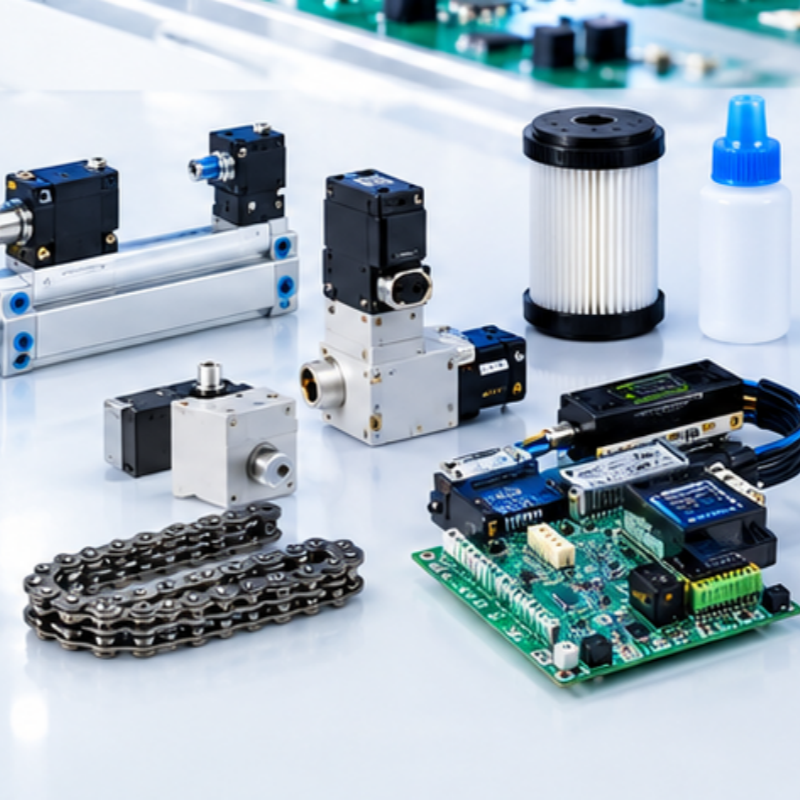
These unsung SMT machine parts occupy a strange position in the maintenance hierarchy. They are cheap enough that replacing them proactively feels like an unnecessary expense, but critical enough that their failure can bring an entire production line to a standstill. This article examines the complete category of overlooked SMT spare parts—from air filters and conveyor belts to pneumatic cylinders, linear bearings, tape cutters, and support pins—and explains why a strategic approach to these components separates high-performing factories from those perpetually firefighting.
The Real Cost of Ignoring the Small Parts
The economics of SMT downtime are brutal. Industry benchmarks consistently show that a single hour of unplanned stoppage on a high-speed placement line can cost anywhere from several hundred to several thousand dollars, depending on the product value and line configuration. What makes these failures particularly frustrating is their predictability. Nearly every component discussed in this article has a known wear cycle, a recommended replacement interval, and a clear set of warning signs. Yet many factories operate on what industry veterans call the “run until failure” philosophy—lubricating only when noises appear, cleaning only when defects spike, and replacing only after the line has already stopped.
The cost of this reactive approach compounds over time. A dirty compressed air filter restricts vacuum pressure, forcing nozzles to work harder and accelerating their wear. A worn conveyor belt introduces PCB vibration during transport, causing component shift that is difficult to diagnose because the defect appears at the AOI station, far removed from its source. A sluggish pneumatic cylinder changes the timing of a mechanical action, subtly altering placement height in ways that are nearly impossible to trace.
Understanding the Full Spectrum of SMT Machine Parts
Air Filters: The Most Overlooked Consumable
The air filter in a placement machine serves a single, unglamorous purpose: it cleans the compressed air that powers the vacuum system. The filter filters the compressed air used in SMT processing to ensure the cleanliness of the cavitation gas; if the filter is dirty and the filtering effect is not good, it will affect the suction of the nozzle and directly affect the patch effect. This chain of consequences is rarely understood until it manifests as mysterious pick failures that persist even after nozzles have been replaced.
Conveyor Belts and Synchronous Belts
The conveyor belt is responsible for transporting PCBs between process stations. The conveyor belt will wear out during long-term use and will break after a certain period of time, so it needs to be replaced. At least one spare part is required, and there may be two spare parts for frequently worn sections. Synchronous belts, also known as timing belts, serve a different but equally critical function. The synchronous belt transmission is composed of an endless belt with equidistant teeth on the inner peripheral surface and wheels with corresponding anastomosis.
Pneumatic Cylinders and Solenoid Valves
Pneumatic cylinders are widely used in placement machines, working in combination with solenoid valves to perform lifting and stopping actions. Over time, cylinders experience wear and dust ingress. If the cylinder is not flexible or not in place due to unclean compressed air, it must be cleaned. If air leaks, it is possible that the sealing ring is aging, and the sealing ring must be replaced.
Linear Bearings and Rolling Bearings
Bearings serve two fundamental roles in placement machine mechanics: limit and support. The critical characteristic of bearing failure is its gradualism. Bearings require stable operation, and if they are operated for a long time, they will be worn. Regular inspections should be carried out. If the bearings are found to have radial movement which affects the normal operation of the equipment, they must be replaced in time.
Tape Cutters and Support Pins
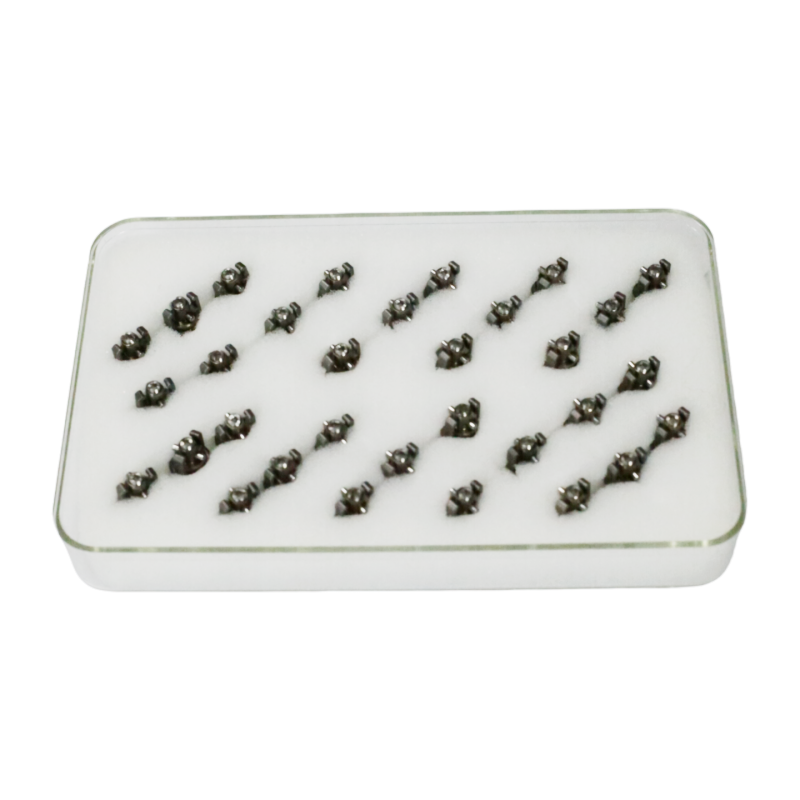
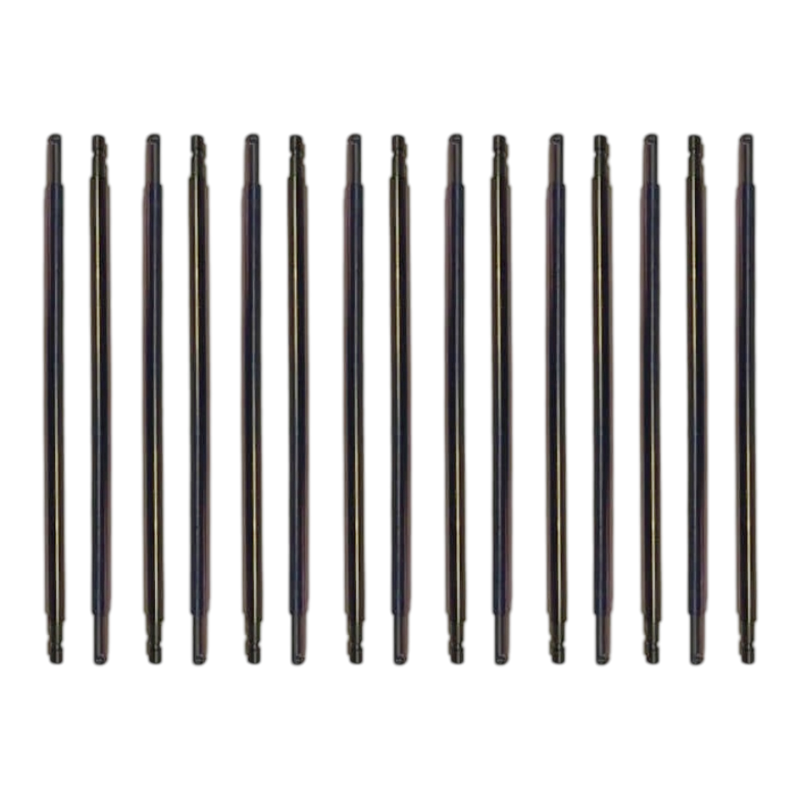
The tape cutter, sometimes called the waste cutting blade, is a small component in the feeder system with an outsized impact on feeder reliability. A dull cutter blade does not fail catastrophically. Instead, it produces partial cuts, leaving fragments of carrier tape that accumulate in the feeder mechanism. Support pins and backup pins are used beneath the PCB during placement and reflow to prevent board flexing. Board flexing during placement can cause components to shift, solder joints to crack, and fine-pitch leads to bridge.
The Strategic Case for Proactive Replacement
Every component discussed in this article has a characteristic wear curve. Filters clog gradually. Belts stretch and fray incrementally. Cylinders develop seal wear over a known number of cycles. Bearings degrade in proportion to load and runtime. The predictability of this wear is precisely what makes proactive replacement so powerful.
Building a Complete Spare Parts Strategy
The logistical burden of managing spare parts from multiple vendors is one of the most underappreciated costs in SMT operations. A supplier that offers a comprehensive range—from nozzles and feeders to filters, belts, cylinders, bearings, cutters, and sensors—simplifies procurement, reduces shipping overhead, and ensures consistent quality standards across all replacement parts.
Conclusion
A spare parts strategy that addresses only the visible components is incomplete. Factories that treat filters, belts, cylinders, bearings, cutters, and support pins as strategic consumables rather than afterthoughts consistently achieve higher equipment effectiveness, lower defect rates, and more predictable production schedules.