

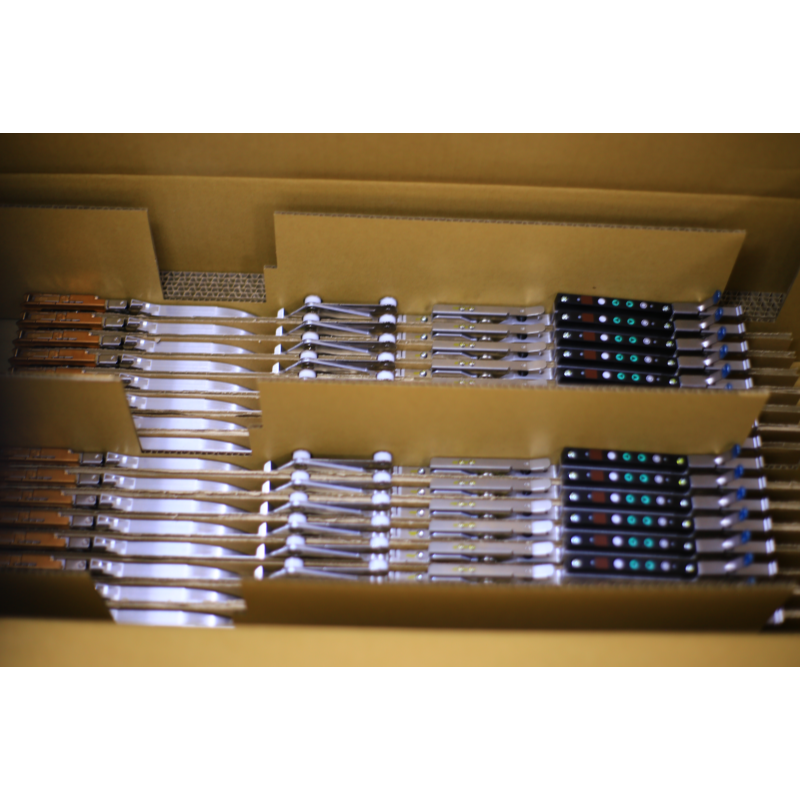
What Makes Panasonic Nozzle Heads Vital for High-Mix SMT Lines
A Quiet Shift Is Reshaping the Assembly Floor
Something has changed in the rhythm of contract electronics manufacturing, and it has very little to do with how quickly a machine can place a chip. Planners who once ran a single board family for an entire week now rotate four or five different assemblies through the same line in one shift. Average lot sizes keep shrinking while the count of active part numbers keeps climbing. Inside that environment the pressing question is no longer how many components a pick and place machine can mount at peak speed. It is how many minutes vanish every time the schedule changes, and which SMT spare parts sit at the centre of those lost minutes.
Industry engineers have a name for the pattern: high-mix SMT. It describes a production mix where variety, rather than volume, defines the workload. A line built for one million identical boards behaves nothing like a line that handles twelve thousand boards across sixty variants. On the first line, the placement head is a throughput component. On the second, it becomes a flexibility component, because almost every changeover decision eventually traces back to what that head can hold, how fast it can be reconfigured, and how reliably it returns to its calibrated state once production resumes.
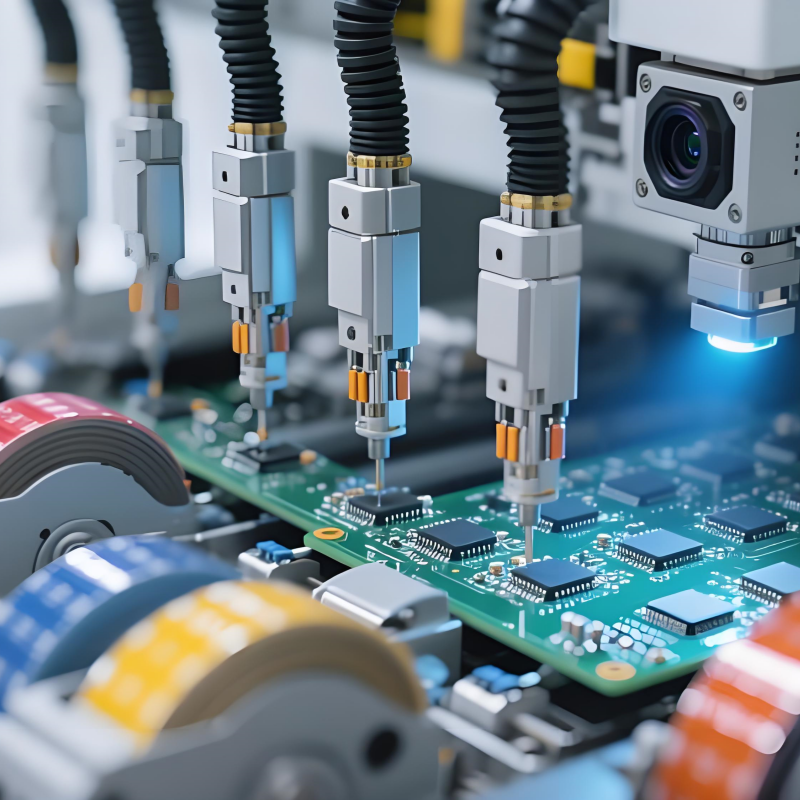
That is why nozzle heads have moved from the maintenance catalogue into scheduling meetings. A nozzle head determines which suction nozzles are available, how many picks happen per gantry cycle, whether odd-form components can run without a second machine, and whether the next job can be prepared while the current one is still running. Procurement teams used to order these modules only when something broke. Now they order them to buy time.
Why Batch Size, Not Rated Speed, Sets the Ceiling
Rated placement speed is a laboratory figure. It assumes a full feeder set, a stable nozzle configuration, an optimised pick sequence, and no interruptions. Real overall equipment effectiveness is shaped by everything the rating leaves out: programme loading, feeder trolleys, nozzle swaps, first-article inspection, and the small settling period while vacuum levels and vision offsets stabilise. On short runs, those non-productive intervals can consume a larger share of the shift than actual placement.
Consider two lines with identical rated output. One runs a single product for ten hours. The other runs ten products for one hour each. If every changeover costs eighteen minutes, the second line gives up three hours of productive time before a single defect or mechanical fault is considered. No increase in peak placement rate can recover that. The only lever is to compress the changeover itself, and the largest compressible block usually lives in the nozzle head and its supporting hardware.
This is the arithmetic that makes fast changeover a purchasing criterion rather than a lean-manufacturing slogan. Every minute saved on a changeover repeats across dozens of events per week, then across every week of the year. A Panasonic nozzle head that can be swapped, pre-calibrated, and validated offline converts a serial interruption into a background task. Over a full quarter, the recovered hours frequently exceed the cost of the spare module itself, which is why experienced production managers treat a second head as capacity rather than inventory.
Where Changeover Minutes Actually Disappear
Breaking a changeover into its real steps explains why the nozzle head matters so much. Programme recall is fast. Feeder trolleys can be staged in advance. Board support and conveyor width are largely mechanical. The slow part is nozzle logistics: deciding which nozzle sizes the new bill of materials needs, locating them, inspecting the tips, seating them into the head, and then confirming that every channel still reads a healthy vacuum.
On a sixteen-nozzle head, that last confirmation is sixteen individual checks. If one tip is chipped, one rod is slightly bent, or one filter element is saturated with flux residue, the whole head may pass a visual check yet produce intermittent mispicks for the first few hundred boards. Technicians then chase a phantom feeder problem while the real cause sits in a nozzle rod seat. This is where SMT spare parts strategy quietly determines whether a line starts clean or spends twenty minutes troubleshooting.
Offline Preparation Turns Serial Work Into Parallel Work
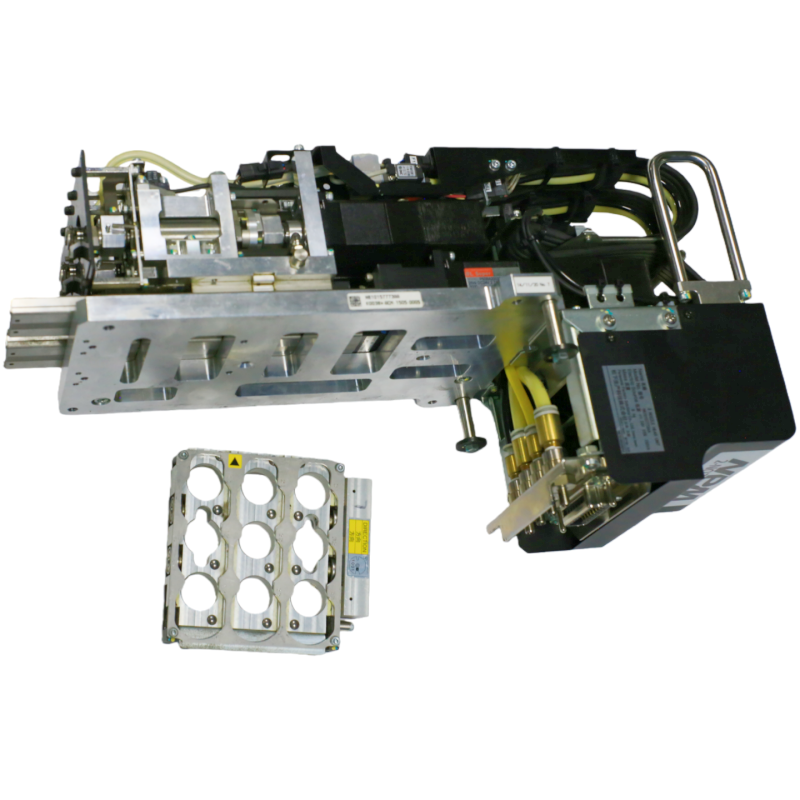
An exchange station is, in effect, a second workplace for the head. It holds the module outside the machine, provides the vacuum and signal connections needed to exercise it, and lets a technician clean, re-nozzle, and verify it without occupying the gantry. When the next job is due, the prepared head docks into the beam and the verification data travels with it. The line stops for the mechanical exchange, not for the preparation.
The V3A offline docking station is the most developed example of this idea. Built for ultra-micro placement heads, it supports deep cleaning and pre-alignment down to ±22 μm, so the head arrives at the machine already close to its final reference. A V3 changer station handles the third-generation sixteen-nozzle module, while separate exchange stations exist for V2, eight-nozzle and sixteen-nozzle heads. Keeping one station per head family means a spare head can always be in preparation, independent of the production schedule.
The practical consequence is a change in how spare heads are justified. A single spare head protects against failure. Two spare heads plus a station create a rotation: one running, one being prepared, one held as a verified standby. In plants running three shifts with daily product rotation, that rotation removes nearly all nozzle-related downtime from the critical path. It also extends component life, because cleaning happens thoroughly on a bench rather than hurriedly beside a running conveyor.
Building a Nozzle Library That Covers the Whole Bill of Materials
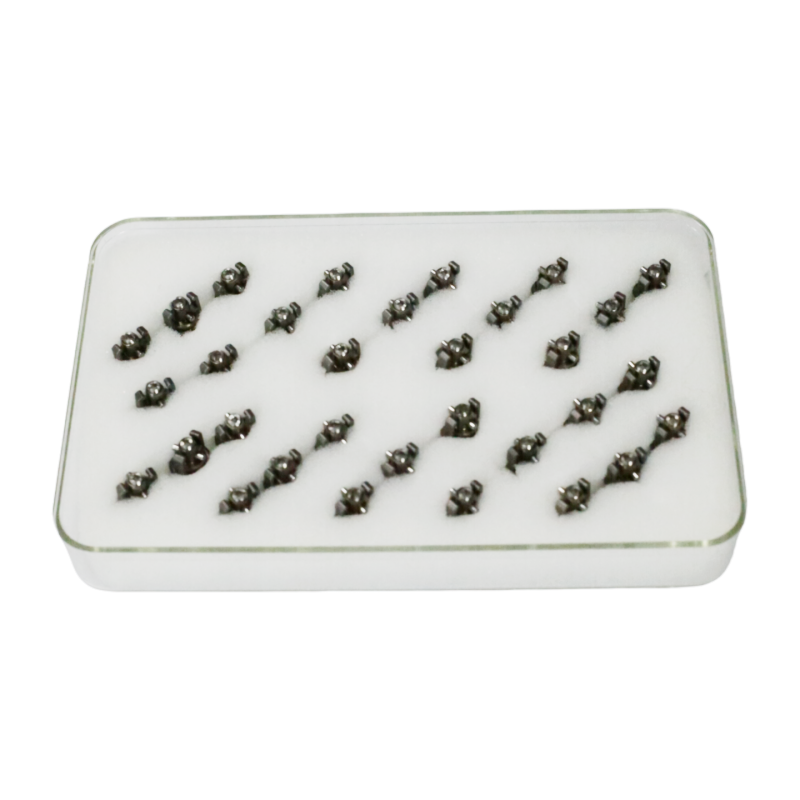
A high-mix line lives or dies by its nozzle coverage. The component spectrum is wide: tiny chips that need a fine tip with low contact force, medium passives that need a broader sealing face, and larger devices that need higher holding force. The SMT nozzle families map onto that spectrum in a fairly orderly way. 1001N, 1005N and 1006N sets serve the smallest chip formats. 140 CSN covers medium components on twelve and sixteen-nozzle heads. Moving upward, 185 CN, 199 CN and 225 CN handle progressively larger bodies, followed by the 225 CSN, 226 CSN, 230 CSN and 235 CSN group. The 235 CSN full kit of 84 pieces is a common choice for lines that want complete coverage in one purchase. Above that sit 240 CSN and 256 CSN for the largest standard parts.
Construction matters as much as size. Anti-static ceramic tips protect sensitive devices, while reinforced alloy bases resist the wear that comes from tens of thousands of contacts per shift. A worn sealing face does not fail dramatically; it simply lowers vacuum margin until a marginal pick becomes a dropped component. That is why a nozzle kit should be treated as a measured consumable with a service count, not an indefinite asset. Recording pick counts per tip and retiring them on a schedule removes a whole category of intermittent defects.
Library organisation is the unglamorous half of fast changeover. Each tip should carry a visible identifier linked to the component database, so the programme can generate a pick list for the next job before the current one ends. Kits stored in labelled foam inserts, grouped by head family, let a technician assemble the next set in minutes. Shops that skip this step reliably lose more time to searching than to swapping.
Micro-Components Raise the Stakes on Every Single Pick
While batch sizes were shrinking, component sizes were shrinking too. 01005 and 0201 passives, fine-pitch system-in-package devices, wearable sensor modules, and compact camera assemblies now appear on ordinary production boards, not just flagship products. Each step downward in component mass reduces the tolerance for every variable in the pick process: vacuum level, tip flatness, Z-axis landing force, and the vibration remaining after the gantry stops.
Modern Panasonic nozzle heads answer that pressure with mechanical precision and closed-loop control. Lightweight sixteen-nozzle units are specified around ±30 μm placement accuracy, while third-generation V3 modules reach ±25 μm. Those figures are only meaningful because the head controls its own descent. Soft-landing Z-axis motion limits the force applied to a fragile body, and independent vacuum channels allow each nozzle to be evaluated on its own rather than as part of a shared manifold. If one channel reads low, the system can flag that specific pick instead of discarding an entire cycle.
Automatic pick correction closes the loop further. Component position measured before placement feeds back into the correction routine, so drift in tip geometry or feeder presentation is compensated in software within defined limits. The result for high-mix work is important: a line can move from a large-passive job to a micro-component job without a lengthy manual re-teach, provided the correct nozzle set was fitted and the head calibration is current.
Electrostatic behaviour is the other half of the miniature-component story. Light parts cling unpredictably to a charged surface, and a tip that is slightly contaminated can hold a chip after the vacuum releases. Anti-static ceramic tips, clean filter elements, and controlled humidity do more for micro-component placement than any software setting. This is also why nozzle head cleaning belongs in the changeover checklist rather than in an occasional deep-service procedure.
Matching Head Configuration to the Order Profile
Choosing a placement head for a high-mix plant is less about maximum nozzle count and more about the shape of the order book. A head with sixteen nozzles is unbeatable on a board dense with small chips, but it is the wrong tool for a board dominated by a handful of large packages. Most flexible lines therefore hold more than one head type and select per job.
At the specialised end, the 2-nozzle head N610157773AA and the 3-nozzle head N610157779AA serve multi-size precision work where holding force and access matter more than cycle count. The 3-nozzle V2 head MTKA012723AA is rated for 100 N and handles parts from 0402 chips up to 120 × 90 mm BGA packages, which makes it the natural choice for tray-fed integrated circuits and odd-form devices on NPM-TT and TT2 platforms. The 4-nozzle head N610167894AA balances micro, medium and IC placement on NPM-DX machines, useful when a board mixes fine passives with a few larger bodies.
For general high-speed chip work, the 8-nozzle H8 head N610081681AA delivers roughly 23,000 CPH, and the lightweight 8-nozzle head N610166414AA covers mixed micro and medium component mounting on NPM-W2 and W2S beams. The 12-nozzle head N610157771AA, identifiable by its white mark, raises that to around 38,500 CPH on the same generation of machines. At the top end, the 16-nozzle lightweight head N610160410AA and its sibling N610157776AA reach approximately 84,000 CPH with ±30 μm accuracy on NPM-W2 and D3 lines.
The generational step is worth separate attention. The 16-nozzle V2 head MTKA005670AA established the ultra-high-speed lightweight format. The V3 head MTKA031521AA moved to 46,000 CPH at ±25 μm on NPM-D3A, running about 12% faster than V2, and reaching roughly 92,000 CPH in dual-lane configuration. The V3A head MTKA042024AA extends that platform to ultra-micro work. For a plant whose product mix is migrating toward smaller parts, that progression is a roadmap rather than a price list.
Odd-Form Parts and a Second Trade on the Same Beam
High-mix boards rarely contain only standard surface-mount parts. Tray-fed ICs, connectors, shields, and unusual mechanical shapes all compete for attention, and sending them to a separate machine costs a whole extra handling step. A 3-nozzle head with high holding force solves part of that problem, and the tray feeder unit N610081685AA completes it by supplying IC trays to the full NPM series without a dedicated placement station. Together they let a single line absorb work that would otherwise need a second process.
The more interesting development is that a head position can now carry a different trade entirely. The dispenser head N610157777AA uses a screw-valve jet to apply adhesive or underfill on the same beam that places components. Underfill beneath a BGA, adhesive around a camera module, or a controlled dot of encapsulant no longer require the board to leave the line. In a high-mix environment that matters twice: it removes a downstream process step and it removes the queue time between steps, which is often longer than the process itself.
Dual-Lane Scheduling as a Changeover Tool
Dual-lane machines are usually discussed in terms of throughput, but for high-mix production their more useful property is independence. On an NPM-D3A, two lanes can run different products concurrently, or one lane can continue production while the other is being prepared for the next job. That turns a hard stop into a staggered transition, which is exactly what a crowded order book needs.
The V3 head MTKA031521AA illustrates the scale of it: 46,000 CPH on a single head, approximately 92,000 CPH across dual lanes, with ±25 μm accuracy maintained. A line that once needed two machines to cover two simultaneous products can cover them on one frame, with a shared feeder bank and shared calibration reference. For a contract manufacturer quoting short runs, that changes both the cost model and the delivery promise.
Board size interacts with this too. Large panels up to 750 × 550 mm constrain lane assignment, because a wide board may occupy both lanes or require a single-lane mode. NPM-W2, WX and TT configurations each handle that constraint differently, and the nozzle head choice follows from it: a large board with relatively few placements benefits from a high-force three-nozzle head, while a dense small board benefits from sixteen nozzles. Planners who map board geometry to head type before the job is released avoid a surprising amount of mid-shift reconfiguration.
The Vacuum Chain Behind Every Stable Pick
A nozzle head is only as consistent as the air path behind it. Between the pump and the component tip sit the rod, the filter element, the solenoid valve, and the flow sensor, and each one can degrade quietly enough to look like a feeder problem. Understanding that chain is what separates a ten-minute fix from a half-shift investigation.
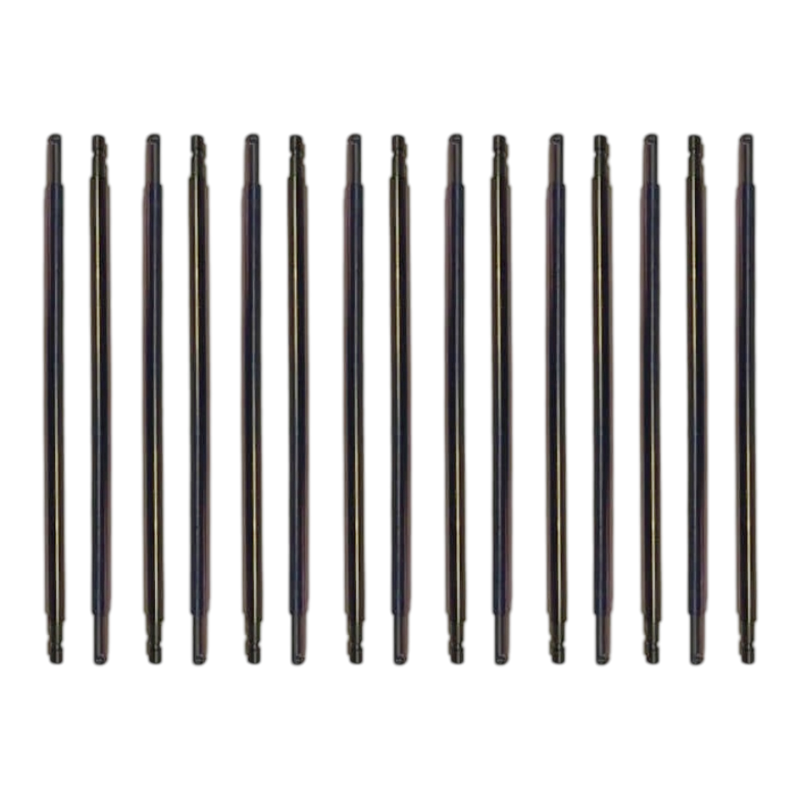
The ball spline nozzle rod N510068432AA is the mechanical heart of the sixteen-nozzle head, converting rotary and axial motion into a repeatable pick stroke. The white-mark 8-nozzle rod N510064708AA serves the V3 eight-nozzle head in the same role. Because rods are matched to head generations, mixing green-mark and white-mark parts within one assembly is a reliable way to introduce stroke variation. Rods also wear at the sealing interface long before they look damaged, so a spare rod belongs in any serious SMT spare parts kit.
Filtration is the next link. The through-hole filter cotton N510059196AA serves the H3 three-nozzle head, N510068213AA serves the H8 eight-nozzle head, and the bottom-base filter cotton N510059928AA serves the H16 sixteen-nozzle head. Flux vapour and board dust load these elements gradually; vacuum margin falls with them. Replacing filter cotton on a fixed cycle is far cheaper than chasing intermittent mispicks, and it is one of the few maintenance actions that improves both speed and yield at once.
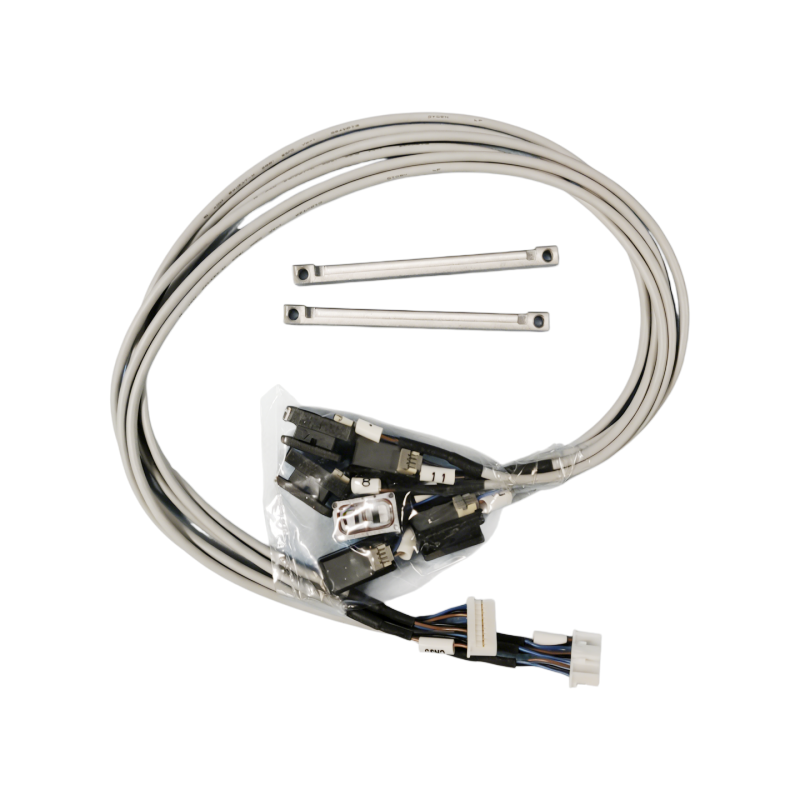
Air switching completes the chain. The solenoid valve N510054843AA controls head vacuum on CM402, CM602 and NPM machines, while N510063838AA handles tape-feeder cutter air on the same families. A sluggish valve changes the vacuum rise time at the start of a pick, which on miniature components is enough to shift a part on the tip. Flow sensors monitor the resulting airflow per channel, so a head with a full set of sensors can report which nozzle is marginal rather than which board is bad. Keeping valves, filters, rods, and sensors as one matched service set is the simplest way to keep placement accuracy stable across changeovers.
Maintenance Cadence That Protects the Changeover Window
Maintenance on a high-mix line should be scheduled around changeovers, not around calendar dates. The logic is straightforward: every planned intervention that can be done during a product transition costs nothing, while the same intervention during a run costs a stopped line. That principle turns the changeover checklist into the primary maintenance document.
A workable rhythm has three levels. Per changeover, tips are inspected under magnification, filter cotton is checked, vacuum baselines are read on every channel, and the head exterior is wiped free of flux residue. Per week, rods are measured for stroke repeatability, solenoid response is timed, and nozzle pick counts are reconciled against the component database. Per quarter, the head returns to a calibration jig for full geometric verification using gold and black correction materials, with the results archived against the module serial number.
Consumables should be stocked to the same rhythm. A nozzle kit with a complete size range, spare filter cotton for each head family, at least one matched rod, and a known-good solenoid valve covers the majority of unplanned events. Anti-static storage, ESD-safe handling, and RoHS documentation belong in the receiving procedure rather than being assembled after an audit request. None of this is exotic; it is simply the difference between a spare part that restores production in twenty minutes and one that starts a new investigation.
Three Factory Profiles, Three Different Answers
The right nozzle head strategy depends on where a factory sits on the volume-versus-variety curve, and general advice tends to fail precisely because it ignores that position.
A prototype and NPI facility runs tiny batches with frequent engineering changes. Its priority is coverage, not speed. A 3-nozzle head with high holding force, a 4-nozzle head for mixed IC work, a broad nozzle library, and a dispenser head give it the ability to build almost anything without waiting for a new machine. An exchange station matters less here, because the line stops for programme edits anyway; what matters is having the right tip available at short notice.
A mid-volume contract manufacturer running dozens of variants per week faces the hardest version of the problem. Here fast changeover dominates. Two or three heads per beam, a dedicated exchange station for each head family, a rigorously indexed nozzle kit, and pre-staged feeder trolleys are the core investment. Dual-lane capability pays back quickly because it allows one lane to be prepared while the other produces. This is the profile where SMT spare parts inventory is genuinely a capacity decision.
A high-volume plant with a stable product mix has different needs again. Changeovers are rare, so the premium falls on sustained accuracy and uptime: matched rods, fresh filter elements, calibrated sensors, and a verified spare head held in reserve. Buying extra head variety would tie up capital without recovering any minutes. The discipline here is not flexibility but consistency, and it is measured in how long a head holds its vacuum baseline between services.
Frequently Asked Questions
Does a second nozzle head really reduce changeover time, or just move the work elsewhere? It moves the work off the critical path. Cleaning, re-nozzling and verification still happen, but they happen while the machine is producing. The line stops only for the mechanical exchange and a short validation.
Which nozzle sizes should a high-mix line buy first? Start from the bill of materials rather than from a catalogue. Map every component to its required tip, then choose a kit that covers the full range; the 235 CSN 84-piece kit is a common single-purchase answer for sixteen and twelve-nozzle heads.
Can one exchange station serve several head generations? Generally no. Stations are built around a specific head family, so V2, V3A, eight-nozzle and sixteen-nozzle modules each need their own docking fixture and calibration reference.
How often should filter cotton be replaced? Tie it to vacuum baseline readings rather than a fixed calendar. Once a channel consistently reads below its recorded margin, the element is loaded; on dusty or high-flux lines that can be a matter of weeks.
Does dual-lane operation always double output? Only when both lanes are fed with balanced work. In practice it is most valuable for running two products at once or preparing one lane while the other produces, which is exactly the high-mix case.
What should be confirmed before ordering a replacement head? Machine model, head generation, nozzle count, mark colour, rod and sensor compatibility, and whether an exchange station or calibration jig is already available on site. Those six details prevent the majority of fitment problems.
The Line That Wins Is the Line That Restarts Fastest
Peak placement numbers still sell machines, but they no longer describe how a busy factory actually makes money. In a market where orders arrive in smaller batches and component geometries keep tightening, the decisive interval is the one between the last board of one job and the first good board of the next. Panasonic nozzle heads, supported by exchange stations, disciplined nozzle libraries, and a well-kept vacuum chain, compress that interval in a way that no software setting can.
For anyone sourcing SMT spare parts for a flexible line, the useful question is therefore not which head is fastest in isolation. It is which combination of head, station, consumables and documentation lets the next job begin without hesitation. That combination is what turns a schedule full of small orders from a liability into a competitive advantage.