- Home
- Products
- About Us
- Application
- FAQ
- News
- Contact Us
Leave Your Message
Optimizing stencil alignment, board conveyance, and optical fiducial recognition across high-mix SMT lines.
In modern surface mount technology (SMT) ecosystems, electronic assemblies are governed by ultra-fine pitch footprints including 01005 passives, micro-BGAs (Ball Grid Arrays), and wafer-level chip scale packages (WLCSP). Within this operational realm, empirical data confirms that upwards of 60% to 70% of post-reflow soldering defects originate directly from the solder paste deposition process. Consequently, the role of modern PCB stencil machines—ranging from high-precision laser cutting and electro-polishing equipment to high-speed automatic stencil printers—has undergone a systemic transformation. Stencil machines are no longer isolated tooling peripherals; they serve as foundational process anchors that dictate feeder loading parameters and pick-and-place nozzle vacuum dynamics.
The contemporary electronics manufacturing service (EMS) industry operates under rigorous demands: cycle times must decrease while first-pass yields (FPY) approach zero-defect thresholds. This continuous pressure mandates that mechanical aperture walls achieve mirror finishes down to nanometer-scale roughness, eliminating paste release hesitation. Concurrently, precise stencil alignment prevents microscopic volumetric discrepancies that otherwise compound pick-and-place tracking errors down the line.
Closed-loop optical fiducial tracking synchronizes stencil apertures with underlying copper pads, reducing positional variance under 10 micrometers.
Real-time telemetry coordinates tape advancement and tension control, mitigating component tilting and nozzle pickup misalignments.
Automated cavity purging dislodges dried solder paste particles and flux residue, restoring vacuum flow integrity across miniature tips.
In a high-performance surface mount workflow, the PCB stencil machine operates in continuous tactical synergy with component feeding units and vacuum pick-up nozzles. When solder paste is printed via a laser-cut, nickel-electroformed stencil aperture, the physical deposit creates a localized adhesive bed. If the volume of this paste deposit deviates due to worn squeegee mechanics or aperture clogging, the subsequent placement sequence is compromised.
Excessive paste thickness causes component flotation during reflow, resulting in bridge defects, skewing, and tombstoning. Conversely, insufficient paste starvation prevents complete wetting, leading to cold solder joints or open connections. Precision automated stencil cleaning machines, equipped with solvent-vacuum-wipe cycles, preserve aperture geometry throughout extended production batches.
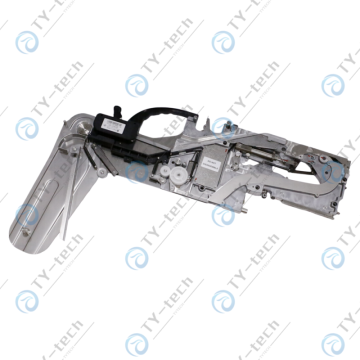
Feeders—whether high-speed motorized electric systems or durable pneumatic units—are tasked with indexing miniature surface-mount devices (SMDs) at speeds up to dozens of picks per second. Mechanical wear, ribbon tension drift, and sprocket backlash produce positional variations at the pick point. By integrating automated feeder calibration jigs with laser tracking, line engineers can measure pitch deviations and center offsets, drastically reducing nozzle search latency.
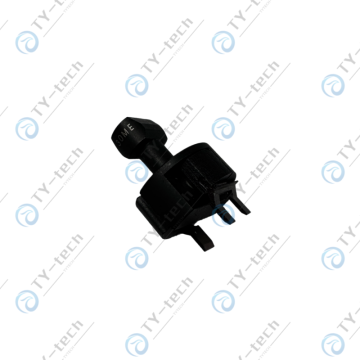
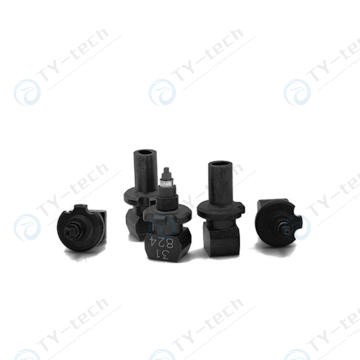
Modern pick-and-place nozzles rely on precise internal airflow dynamics. Vacuum pressures must be monitored via digital sensors. Solder dust, residual flux vapors, and particulate debris cause inner lumen constriction. Upgrading nozzle maintenance from manual alcohol dipping to automated ultrasonic washing and computerized optical inspection stations prevents intermittent vacuum dropouts, component drop defects, and inaccurate theta-axis rotational orientation.
The electronics manufacturing market is aggressively adopting smart Industry 4.0 architectures. Where maintenance of stencils, feeders, and nozzles was historically reactionary—initiated only after automated optical inspection (AOI) or solder paste inspection (SPI) flags alarming defect spikes—modern facilities utilize predictive closed-loop analytics.
Under this predictive paradigm, every individual feeder and nozzle is serialized via 2D DataMatrix codes or RFID tags. As SPI sensors analyze paste height and area deviations, machine intelligence determines whether the variance stems from stencil aperture degradation or feeder positioning drift. Simultaneously, if an AOI system registers consistent part rotation on a specific placement head, the line controller schedules automated nozzle purging before catastrophic pick errors stop the production line.
This closed-loop maintenance upgrade lowers the total cost of ownership (TCO) across capital machinery, maximizes overall equipment effectiveness (OEE), and ensures consistent thermal stability throughout multi-layer PCB runs.
Offering professional SMT factory building advice and service
TY-Tech is the leading SMT factory solution provider in China, offering professional SMT factory building advice and service. We have 20 year experience about SMT factories, offering full solutions for global clients with our great advantaged sources. Our core technology team members are well experienced in SMT field, learning experience from top international chip mounters meanwhile increasing independent research and development. Currently TY-tech equipment is representative of high quality, having maintained absolute leading technology in the industry.
Over the years the company has been committed to improving technology, quality and perfect service. TY-tech makes a positive contribution to international standard, the annual total capacity of 1200 sets, passed the ISO9001: 2000, ISO14000, CE, UL, RoHS and other certifications. Full implementation of the IPD process, reliable design and testing throughout the entire product life cycle.


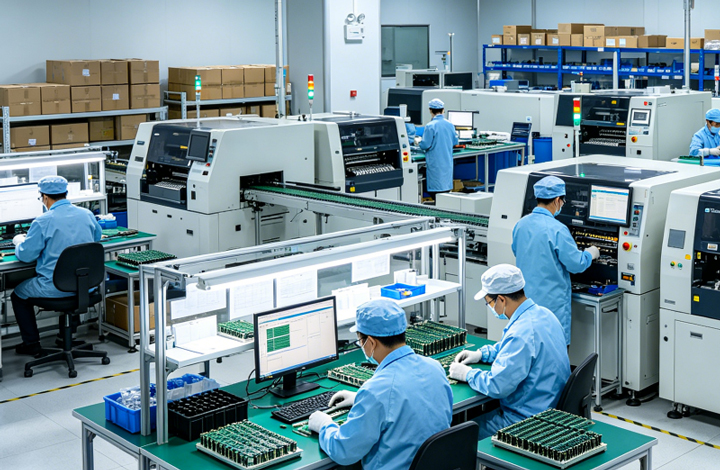
TY-tech continued investment in research and development and great contribution has been unanimously recognized in the field. By the end of 2000, TY-tech has declared more than 30 patents and software copyrights (including four invention patents), and actively involved in a number of national and industry standards. TY-tech provides more advanced products and fast technical support for global customers, at home and abroad.
We pride ourselves on a customer-oriented business philosophy. Our professional support team works closely with clients from initial inquiry to after-sales service, providing tailored solutions, flexible OEM/ODM services, and efficient logistics coordination. We understand the diverse needs of different markets and are committed to building long-term, collaborative relationships with distributors, retailers, and brands worldwide.
"Sustainability and social responsibility are integral to our corporate ethos. We prioritize eco-friendly materials and energy-efficient designs, aiming to minimize environmental impact throughout our product lifecycle. Our operations comply with all relevant environmental and ethical regulations, reflecting our dedication to responsible business practices."
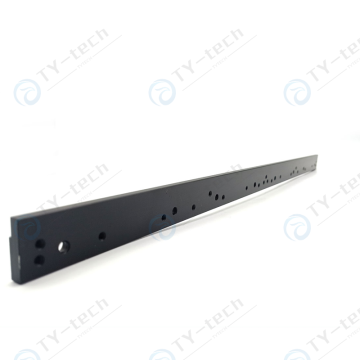
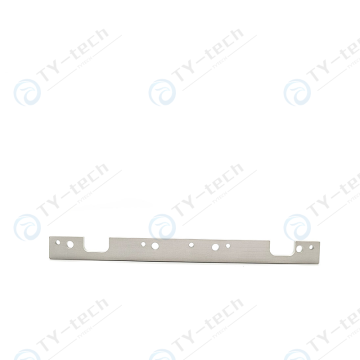
OEM-grade replacement parts, high-speed nozzles, and structural clamp rails for premier pick-and-place performance.