Leave Your Message
The global rollout of 5G infrastructure has revolutionized wireless communications, delivering unprecedented data speeds, ultra-low latency, and massive device connectivity. At the core of this technological leap are 5G communication base stations, which require highly complex, high-frequency, and multi-layer Printed Circuit Boards (PCBs). Manufacturing these advanced boards demands SMT (Surface Mount Technology) processes that can withstand tight tolerances, high thermal masses, and delicate components. Among these processes, reflow soldering equipment stands as a critical pillar, directly determining the electrical integrity, mechanical strength, and long-term reliability of 5G hardware.
Unlike consumer electronics, 5G base station PCBs are characterized by large physical dimensions, heavy copper layers, high-Tg (glass transition temperature) laminates, and an extremely high density of RF (Radio Frequency) components. Reflow soldering must be executed with extreme thermal precision to prevent defects like cold solder joints, PCB warping, and component damage.
To understand the necessity of specialized reflow soldering equipment, we must analyze the unique characteristics of 5G telecommunication boards:
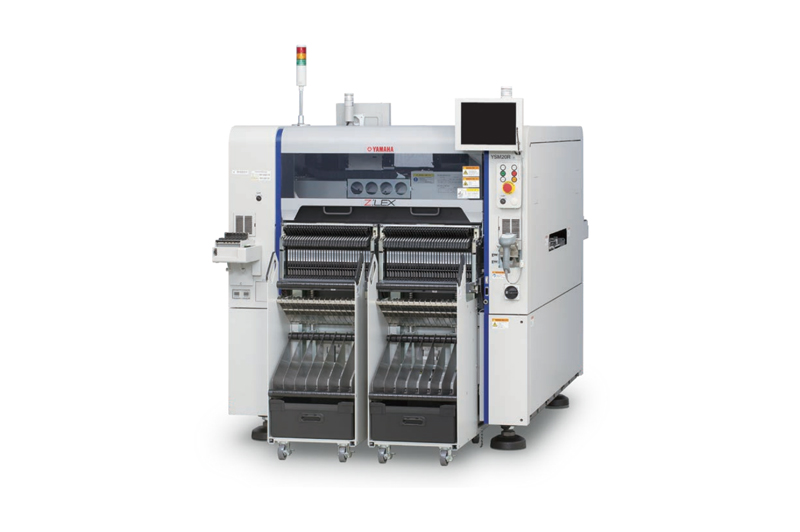
Advanced reflow ovens with 10 to 12 heating zones allow precise delta-T control across large-format boards, ensuring uniform thermal absorption.
Maintaining oxygen levels below 100 ppm prevents oxidation of copper pads and solder alloys, enhancing wetting and reducing void rates.
Integrating a vacuum chamber during the liquidus phase eliminates voids in solder joints, critical for high-power RF power amplifiers.
The industrial demand for high-end reflow soldering equipment is surging, driven by the rapid expansion of macro base stations and micro/small cells worldwide. Telecom giants and EMS (Electronics Manufacturing Services) providers are upgrading their SMT production lines to accommodate the stringent requirements of 5G hardware. This has shifted the commercial landscape from standard reflow ovens to highly specialized, intelligent thermal processing systems.
Furthermore, because base stations are deployed outdoors and subjected to extreme environmental conditions (temperature fluctuations, humidity, and vibration), the solder joints must exhibit exceptional fatigue resistance. Manufacturers are transitioning to lead-free alloys like SAC305 combined with specialized dopants, which have narrower process windows and require highly stable reflow conditions.
Power amplifiers in 5G base stations generate significant heat during operation. To manage this, PA chips are soldered directly onto copper coins embedded within the PCB. Reflow soldering equipment must deliver intense, focused heat to melt the solder under these large metal masses without causing localized board warping or delamination. Vacuum-assisted reflow is frequently employed here to reduce voiding below 5%, ensuring optimal thermal conductivity.
Massive MIMO (Multiple-Input Multiple-Output) systems utilize dozens of transceiver channels on a single board. The placement density of RF connectors and filters is extremely high. Reflow ovens must feature advanced convection systems to ensure that hot air reaches shielded or shadowed joints, guaranteeing 100% solder coverage and preventing signal attenuation.
Data routing within 5G networks relies on high-speed backplanes and optical modules. These components are sensitive to electromagnetic interference (EMI) and require precise alignment. SMT reflow lines must operate with minimal vibration and precise conveyor tracking to prevent component shifting during the liquidus state.
As the industry looks toward 5.5G and 6G, reflow soldering equipment is evolving in several key directions: