- Home
- Products
- About Us
- Application
- FAQ
- News
- Contact Us
Leave Your Message
Explore initial core sub-assemblies engineered to eliminate placement drift, maintain continuous vacuum seal, and secure reliable high-cycle reciprocation.
Addressing sub-millimeter component miniaturization, cycle wear, and real-time electronic production demands.
With 0201 (metric 0603) and 008004 chip packages dominating consumer mobility and medical arrays, component pick tolerances on Samsung CP, SM, and DECAN systems have dropped below ±25 microns, leaving zero room for feeder indexing drift or tip runout.
Microscopic solder dust, flux fumes, and shaft wear create insidious vacuum leakage within the pick-and-place head. A minor 5% drop in dynamic vacuum suction pressure causes severe mid-flight tombstoning, misorientation, and intermittent nozzle vision rejects.
Modern Surface Mount Technology (SMT) management has transitioned from reactive breakdown intervention to algorithmic CPK maintenance. Continuous calibration audits protect automated assembly yields, stabilizing Mean Time Between Failures (MTBF).
The industrial trajectory of Samsung surface mount equipment—spanning legacy workhorses such as the CP45FVNE, SM421, SM471, and SM482 through to the cutting-edge Hanwha DECAN, SLM, and HM520 series—demonstrates a persistent drive toward hyper-fast, highly adaptive electronic assembly. These pick-and-place platforms are celebrated worldwide for their balance of high throughput (cph up to 100,000+ across dual gantries) and multi-product flexibility across consumer electronics, automotive ECUs, server motherboards, and LED panels.
However, running these high-speed kinematic systems at sustained multi-shift production rates exposes critical components—specifically tape feeders, pneumatic and electric feeders, nozzle banks, and vacuum drive shafts—to immense mechanical fatigue and particulate contamination. Without an assertive, high-precision maintenance regimen, even a flagship Samsung mounter will suffer gradual efficiency degradation, resulting in costly component mispicks, thrown parts, vision fiducial recognition timeouts, and catastrophic line halts.
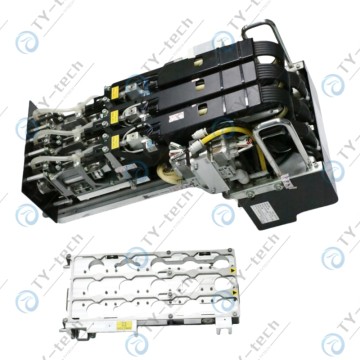
The feeder carriage represents the mechanical threshold where electronic components transition from passive reels into ultra-high-speed placement heads. Whether dealing with Samsung pneumatic feeders (such as 8mm, 12mm, 16mm, 24mm, 32mm, 44mm, and 56mm ribbon variants) or modern brushless electric motorized intelligent feeders (SME series), mechanical wear directly translates into pick-point displacement.
Over tens of thousands of advance cycles, several mechanical and electrical deviations accumulate:
Upgrading feeder maintenance with high-magnification optical calibration benches allows technicians to adjust gear engagement, test advance speed profiles, and recalibrate zero-reference points with micron-level certainty.
| Failure Mode | Root Cause | Prescribed Action |
|---|---|---|
| P-Pick Miss | Advance ratchet tooth wear | Opto-jig calibration & ratchet replacement |
| Tape Jamming | Peeling route wax/debris build-up | Ultrasonic clean & tension gauge reset |
| Positional Offset | Feeder tail locating pin erosion | Replace locating pins & true datum plate |
| Motor Stall | Motor encoder drift / gear friction | Degrease, lubricate with high-grade synthetic grease, reset EEPROM |
Eliminating pick errors, nozzle vision detection faults, and component drops through advanced maintenance regimes.
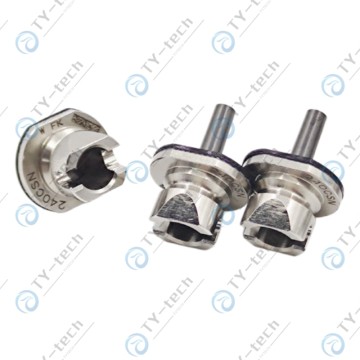
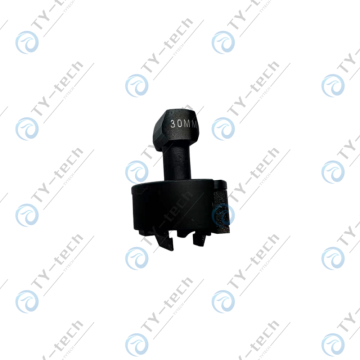
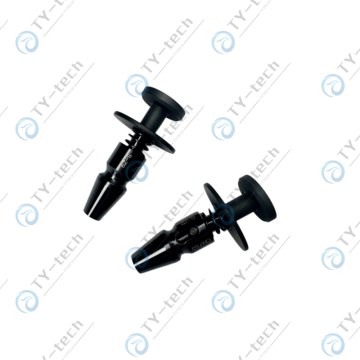
Micro-nozzles (e.g., Samsung CN020, CN040, CN065, CN140, CN220, CN400, CN750) collect volatilized solder flux residues, fibrous dust, and component chipping over thousands of placements. This restricts airflow, reducing negative vacuum pressure and making it impossible to hold high-speed parts securely during angular gantry travel.
Machine vision systems on Samsung pick-and-place lines rely on precise background contrast provided by nozzle reflective green/white ceramic or high-luminescence plates. Scratches, carbon buildup, or chemical discoloration confuse the bottom-view camera, triggering erroneous part rejection cycles.
Internal return springs and ceramic rubber tips degrade over prolonged high-impact downstrokes. An uncalibrated nozzle stem introduces axial and radial runout (eccentricity), tilting the component slightly upon placement and yielding wet-solder short circuits.
Traditional manual wiping of nozzles using cotton swabs is inherently dangerous for micro-geometry nozzles, as loose cotton fibers can lodge within sub-millimeter apertures. Modern standard operating procedures mandate the deployment of dedicated automated SMT nozzle cleaning machines utilizing fluid cavitation and pulsing deionized water at controlled pressure ratings.
Following high-frequency cleaning, nozzle sets must undergo dual-spectrum verification: a digital vacuum flow rate test that quantifies flow restriction against factory specifications (typically requiring positive seal integrity exceeding -80 kPa), followed by high-resolution optical inspection to examine concentric tip runout and 360-degree reflective perimeter flatness. Damaged or worn tips should be proactively decommissioned and swapped with pristine original-spec equivalents.
A standardized engineering methodology designed to guarantee optimal OEE, CPK yield stability, and minimal downtime.
Extract error log archives from machine software (MMI/Smart Factory). Identify outlier feeder tracks and nozzle spindle locations exhibiting pick reject rates greater than 0.05%.
Disassemble feeder guides and nozzle banks. Immerse in specialized ultrasonic degreasing solvent baths to dissolve evaporated resin, solder balls, and contaminated grease.
Mount feeders onto dedicated optical alignment platforms. True the tape drive sprockets to within ±0.01 mm of machine centerlines and recalibrate electronic sensor thresholds.
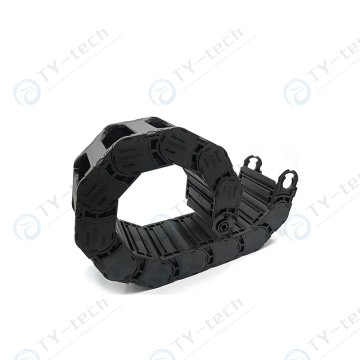
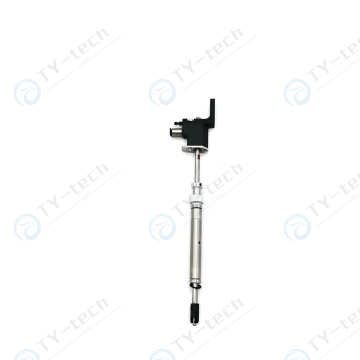
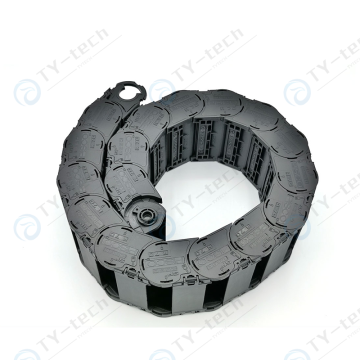
Inspect pick head suction rods, rotary spline shafts, and Y/X cable tank drag chains for vibration dampening and linear bearing wear before returning to production.
TY-Tech is the leading SMT factory solution provider in China, offering professional SMT factory building advice and service. We have 20 year experience about SMT factories, offering full solutions for global clients with our great advantaged sources. Our core technology team members are well experienced in SMT filed, learning experience from top international chip mounters meanwhile increasing independent research and development Currently TY-tech equipment is representative of high quality , has maintained absolute leading technology in the industry.
Over the years the company has been committed to improving technology, quality and perfect service. TY-tech makes a positive contribution to international standard, the annual total capacity of 1200 sets, passed the ISO9001: 2000, ISO14000, CE, UL, RoHS and other certifications. Full implementation of the IPD process, reliable design and testing throughout the entire product life cycle.


TY-tech continued investment in research and development and great contribution has been unanimously recognized in the field. By the end of 2000, TY-tech has declared more than 30 patents and software copyrights (including four invention patents), and actively involved in a number of national and industry standards. TY-tech provides more advanced products and fast technical support for global customers, at home and abroad.
We pride ourselves on a customer-oriented business philosophy. Our professional support team works closely with clients from initial inquiry to after-sales service, providing tailored solutions, flexible OEM/ODM services, and efficient logistics coordination. We understand the diverse needs of different markets and are committed to building long-term, collaborative relationships with distributors, retailers, and brands worldwide.
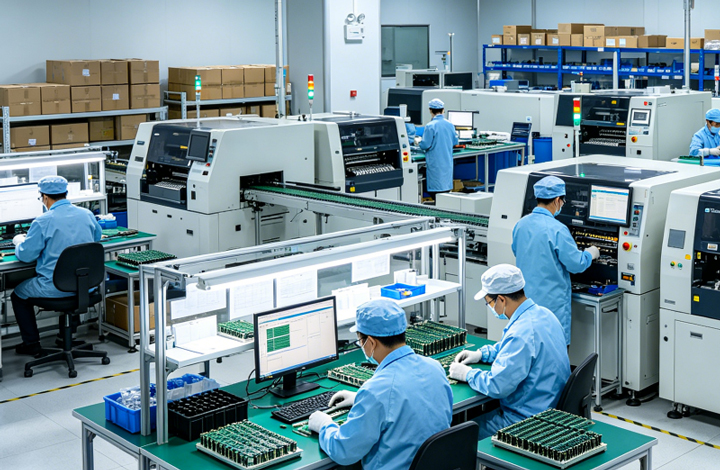

Welcome To Learn About Our Company
Sustainability and social responsibility are integral to our corporate ethos. We prioritize eco-friendly materials and energy-efficient designs, aiming to minimize environmental impact throughout our product lifecycle. Our operations comply with all relevant environmental and ethical regulations, reflecting our dedication to responsible business practices.
Pioneering self-diagnosing feeder racks, automated nozzle exchange inspection, and zero-defect SMT processing.
The convergence of Industrial Internet of Things (IIoT) with Samsung pick-and-place lines has transformed maintenance from schedule-based routines to condition-based, real-time interventions. Smart feeder carts integrated with RFID tags and embedded memory chips continuously synchronize total step counts, advance cycle counts, and past repair history directly with factory MES (Manufacturing Execution Systems).
When a feeder approaches its prescribed actuation limit (typically set between 300,000 to 500,000 indexing steps depending on component weight and reel tape material), the system automatically restricts feeder loading or prompts line engineers to switch to secondary feeder banks during planned job changeovers. This prevents component tossing defects before they compromise line performance.
On advanced Hanwha DECAN and SM series mounters, fly-by vision cameras now work in tandem with deep-learning vision models. Instead of simply generating a generic "vacuum failure" alert, algorithms classify defect types dynamically: identifying misaligned component bodies, bent IC leads, particulate occlusion on nozzle tip borders, or missing carrier tape pockets.
These analytics pinpoint whether the fault originates from reel tensioning, mechanical guide rail wear, or a clogged pneumatic nozzle channel. Armed with actionable diagnostic intelligence, maintenance teams resolve issues within minutes rather than spending valuable production hours on manual root-cause investigation.
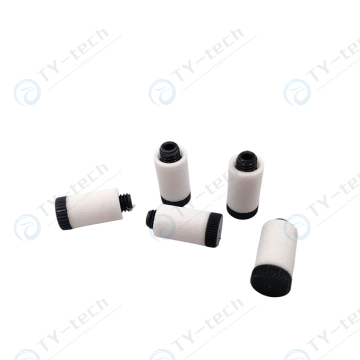
Explore our full selection of tested nozzles, vacuum suction rods, cable drag tracks, and sound attenuation parts designed for Yamaha, Hanwha, and Panasonic systems.