- Home
- Products
- About Us
- Application
- FAQ
- News
- Contact Us
Leave Your Message
Pre-calibrated OEM-standard placement heads, high-vacuum rods, pitch servo drives, and specialized synthetic lubricants engineered for rapid swap-in during catastrophic IoT SMT line shutdowns.
Modern Internet of Things (IoT) hardware requires sub-30 micron placement accuracy, extreme pick-and-place velocities, and instantaneous turnaround during unplanned feeder, spindle, and transmission failures.
Standardizing pre-calibrated modular swap components—including pre-aligned 16-nozzle rotary heads and servo-driven tape cassettes—compresses unscheduled line stoppages from hours to under 12 minutes.
IoT edge controllers demand ultra-dense passive arrays. Precision vacuum rods with micro-orifice tolerances ensure zero pickup skewing, preventing billboard defects and tombstoning on high-density PCBs.
High-speed spline shafts and vacuum flow paths suffer severe friction in continuous 24/7 environments. Utilizing certified OEM-grade lubrication eliminates thermal micro-binding in high-speed gantries.
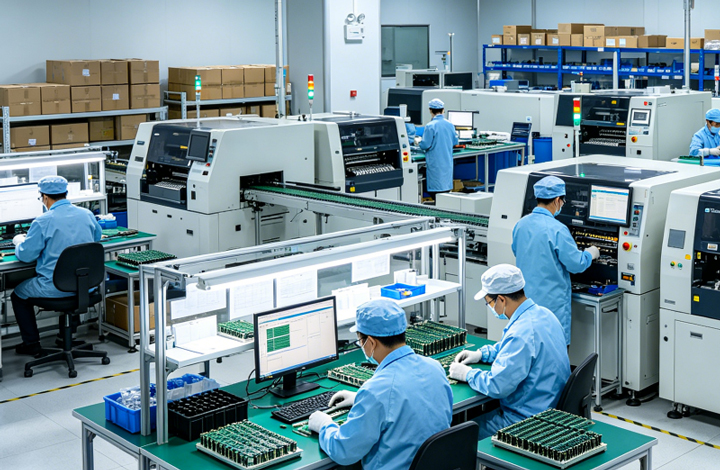
The global proliferation of IoT smart devices—spanning wearable biosensors, industrial telemetry nodes, intelligent building automation modules, and automotive V2X telematics—has permanently altered the economics of Surface Mount Technology (SMT). Unlike conventional consumer electronics boards, IoT printed circuit boards (PCBs) are characterized by unprecedented component packaging densities. Design engineers are continuously packing multi-band RF transceivers, ultra-low-power microcontrollers (MCUs), power management integrated circuits (PMICs), and hundreds of 0201/01005 discrete passives onto ultra-thin flex or rigid-flex substrates. In this hyper-miniaturized manufacturing landscape, high-speed SMT placement equipment represents both the primary engine of productivity and the single largest single-point-of-failure risk.
When an unexpected breakdown occurs on an active IoT PCB assembly line—such as a seized multi-nozzle placement shaft, a pitch servo motor burnout on an electric feeder, or a degraded conveyor lifting transmission belt—the consequences ripple instantly across the entire enterprise. High-volume SMT lines operate at financial run rates exceeding thousands of dollars per line hour. Unplanned line stoppages not only cause acute throughput losses but also introduce thermal imbalances into downstream multi-zone reflow ovens, increase solder paste oxidation on unsheltered boards, and jeopardize rigid just-in-time (JIT) supply chain SLAs for mission-critical connected hardware rollouts.
Addressing emergency line stoppages demands a granular engineering understanding of why placement equipment fails under modern IoT production regimes. Through decades of analyzing shop-floor failure telemetry, TY-Tech engineers have mapped out the primary failure modes that force unscheduled SMT line interventions:
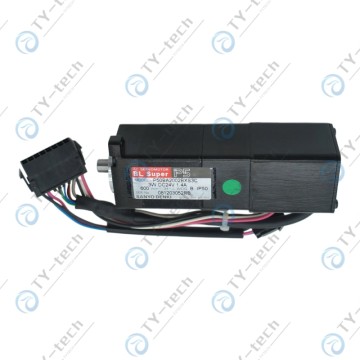
IoT production runs rely heavily on ultra-narrow 8mm and 4mm embossed or paper tape carriers feeding 0201 resistors and capacitors. The relentless cycling of feeder indexing mechanisms—often advancing millions of cycles per week—imposes massive kinematic stress on miniature internal actuators such as the Panasonic N510043455AA 3W Feeder Pitch Servo Motor. Micro-wear in the planetary gearhead or feedback encoder drift produces erratic pocket advance distances. This leads to component pick-up offset errors, component tombstoning inside the tape pocket, or catastrophic nozzle collisions.
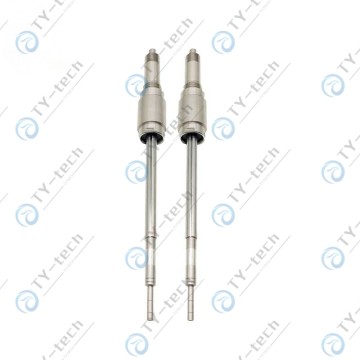
High-mix IoT production demands continuous nozzle changes or high-speed multi-spindle operation. Components like the Panasonic White Mark 8-Nozzle Rod N510064708AA experience continuous microsecond vacuum pulses and atmospheric venting. Solder paste flux outgassing, airborne conformal dust, and micro-particles gradually infiltrate the vacuum path, leading to delayed pickup verification and microsecond vacuum drop-off. Simultaneously, vertical spline shaft friction increases if lubricated improperly, preventing the placement nozzle from maintaining exact Z-axis touch down pressures on fragile silicon dies.
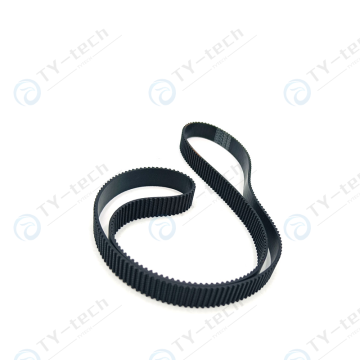
IoT substrates are frequently panelized into multi-up arrays with narrow break-away rails to maximize floor space. Equipment such as Yamaha YSM20R modular mounters rely on precise polyurethane lifting transmission belts like the KLW-M831E-00 Delivers Reliable PCB Lifting Transmission to raise and clamp panels flush against reference pins. As timing belts suffer polyurethane fatigue or tooth pitch elongation, conveyor vibration increases. A micro-vibration of merely 15 microns during high-acceleration board indexing will cause loose 01005 passives resting on tacky solder paste to shift off their pads prior to entering the reflow oven.
"In IoT surface-mount manufacturing, downtime cannot be handled with slow forensic teardowns. Emergency maintenance protocols must resemble an elite pit stop: immediate diagnostic isolation, pre-calibrated hot-swap module drop-in, and rapid return to full CPH operational envelopes."
Achieving a sub-15-minute Mean Time to Repair (MTTR) requires electronics manufacturing services (EMS) providers and Tier-1 OEMs to transition from ad-hoc troubleshooting to a structured three-tiered rapid intervention architecture:
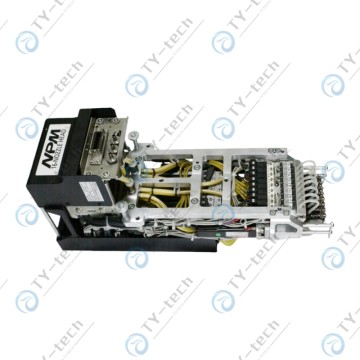
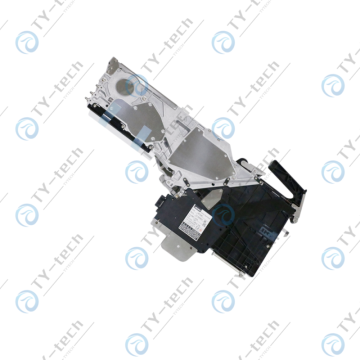
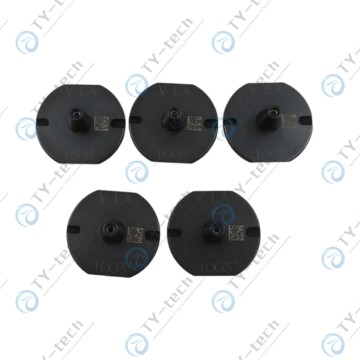
Focuses on externally accessible consumable mechanisms. Involves rapid replacement of misaligned or clogged micro-nozzles (e.g., Panasonic 1003 N Nozzles) and swift swapping of entire electric tape cassettes (e.g., JUKI RF56AS Electric Feeders) using offline pre-loaded intelligent carts without cycling down machine power.
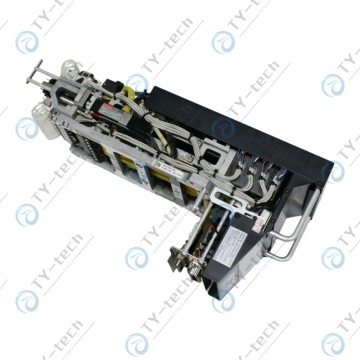
Addresses mechanical actuator and drive train stoppages. When feeder indexing locks or vacuum rods stick, technicians immediately drop in factory-calibrated modular sub-assemblies—such as complete multi-nozzle heads (e.g., Panasonic 16 NOZZLE HEAD UNIT) or complete conveyor lifting assemblies—bypassing lengthy in-situ rebuilds.
Restores optical and kinematic tolerances. Involves dynamic camera fiducial re-centering, vacuum pressure sensor threshold recalibration, and nozzle run-out inspection using specialized high-resolution optical jigs to guarantee ±25-micron accuracy before resuming mass production.
Mechanical wear remains the primary silent killer of high-speed SMT placement gantries. High-speed placement heads like the Panasonic LS Lightweight 16-Nozzle Work Head traverse linear guide rails at accelerations exceeding 3G to 5G. Standard industrial greases degrade, separate, or oxidize rapidly under the intense ambient temperatures generated by adjacent multi-zone reflow tunnels and continuous linear motor magnetic arrays.
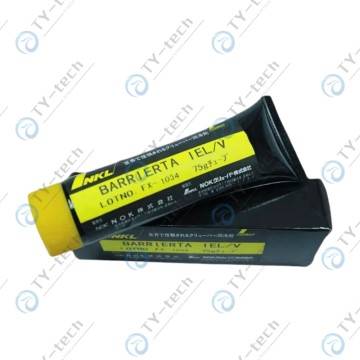
Deploying specialized synthetic formulations such as Panasonic Maintenance Oil KXF05PLAA00 75G is fundamental to both emergency remediation and preventive maintenance. This ultra-pure lubricant provides high boundary lubrication stability, prevents micro-pitting on spline shaft races, repels particulate contamination, and ensures that high-speed vacuum suction shafts retain low friction coefficients over hundreds of thousands of cycles. Ensuring that maintenance technicians have OEM-specified lubricants immediately on hand prevents dry-frictional seizure, which often leads to expensive linear motor amplifier blowouts.
The industrial landscape is moving aggressively toward zero-unplanned-downtime manufacturing. Tomorrow's IoT SMT placement floor relies on the integration of Industrial Internet of Things (IIoT) sensors directly embedded within the pick-and-place equipment itself:
Offering professional SMT factory building advice and service


TY-Tech's continued investment in research and development and great contribution has been unanimously recognized in the field. By the end of 2000, TY-Tech has declared more than 30 patents and software copyrights (including four invention patents), and actively involved in a number of national and industry standards. TY-Tech provides more advanced products and fast technical support for global customers, at home and abroad.
We pride ourselves on a customer-oriented business philosophy. Our professional support team works closely with clients from initial inquiry to after-sales service, providing tailored solutions, flexible OEM/ODM services, and efficient logistics coordination. We understand the diverse needs of different markets and are committed to building long-term, collaborative relationships with distributors, retailers, and brands worldwide.

Welcome To Learn About Our Company
Original-equipment standard modules, feeder motors, vacuum rods, and ultra-high-speed multi-nozzle work heads in stock for rapid dispatch to minimize your line downtime.