- Home
- Products
- About Us
- Application
- FAQ
- News
- Contact Us
Leave Your Message
Precision component feeding and robust maintenance access mechanisms are paramount for zero-defect surface mount technology (SMT) workflows. Explore our high-stability modular feeder units, sliding roller guides, and precision micro-nozzle solutions engineered for industry-leading pick-and-place platforms.
The contemporary surface mount technology (SMT) landscape has entered an era of hyper-miniaturization and unprecedented placement throughput. With the widespread deployment of 0201 (metric 0603) and 01005 passives alongside high-density ball grid arrays (BGAs) and system-in-package (SiP) modules, the mechanical tolerances of pick-and-place equipment have tightened from tens of microns down to single-digit micrometers (±15μm @ 3σ). In this high-velocity manufacturing ecosystem, surface mount equipment can only sustain theoretical placement speeds exceeding 100,000 components per hour (CPH) if the tape feeders and vacuum pickup nozzles operate under uncompromising dimensional precision and dynamic aerodynamic stability.
Historically, SMT line maintenance followed reactive or rigid time-based scheduled overhauls. Modern high-mix high-volume (HMHV) electronic manufacturing service (EMS) plants, automotive tier-1 suppliers, and semiconductor packaging facilities can no longer afford unpredicted line micro-stops caused by tape advancement backlash, misaligned feeder reels, or nozzle vacuum flow attenuation. Modern surface mount equipment maintenance has evolved into an interconnected discipline combining optical calibration jigs, intelligent feeder tracking RFID/barcodes, pneumatic integrity verification, and data-driven predictive lifecycle algorithms.
A mere 0.05mm angular or linear offset in feeder tape presentation or a 12% drop in nozzle vacuum pressure directly cascades into component tombstoning, billboarding, mechanical cracking, and high false rejection rates at Automated Optical Inspection (AOI) gates. Upgrading feeder calibration infrastructure and nozzle cleanliness protocols ensures overall equipment effectiveness (OEE) remains above 92%.
Advanced electric and intelligent motor-driven feeders (IT Feeders) utilize micro-stepper motors and optical position sensors to eliminate mechanical ratchet backlash, guaranteeing tape pitch indexing repeatability within ±0.01mm.
Upgraded nozzle tips engineered from high-purity zirconia ceramic or synthetic diamond coatings prevent magnetic flux accumulation, minimize solder paste paste adhesion, and extend service lifespans across millions of picking cycles.
Closed-loop optical verification stations evaluate nozzle tip concentricity, micro-fractures, and air orifice diameter while verifying feeder tape pocket centerlines before feeding carts enter the live production bay.
Surface mount equipment operates under severe cyclic accelerations, frequently exceeding 2G to 5G during high-speed gantry traversal. Under such dynamic stresses, micro-wear at component interface points accumulates rapidly. Understanding the mechanics of wear in tape feeders, pickup nozzles, sliding roller guides, and I/O signal interconnects is critical for establishing preventive maintenance excellence.
In pneumatic and mechanical tape feeders, gear tooth abrasion, cover tape peeling tension fluctuation, and guide rail wear are primary failure modes. When peeler tension deviates, the carrier tape may lift slightly, causing component rotation within the embossed cavity prior to nozzle contact. In contrast, intelligent electric feeders (e.g., Hanwha SME IT series or Panasonic KXFW1 series) mitigate mechanical slop through digital closed-loop encoders. However, calibration fixtures must regularly measure pitch sprocket concentricity and brake torque to prevent tape stretch and pocket de-centering.
Pick-and-place nozzles rely on precise differential pressure (ΔP) to secure micro-passives. Solder flux vapors, airborne particulate contaminants, and micro-solder spheres gradually deposit along internal vacuum passages. An invisible 10% reduction in inner orifice diameter produces an exponential decay in vacuum flow rate according to Poiseuille's law, leading to component drop-off during rapid rotational alignment. Implementation of ultrasonic resonance cleaning paired with automated vacuum flow metering eliminates these silent defect sources.
| Component / Assembly | Common Failure Indicator | Precision Upgrade Solution |
|---|---|---|
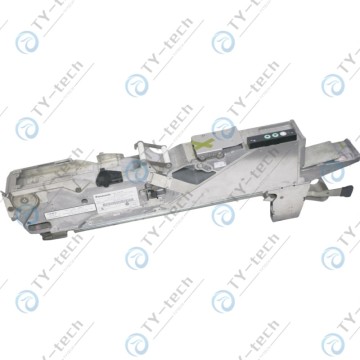
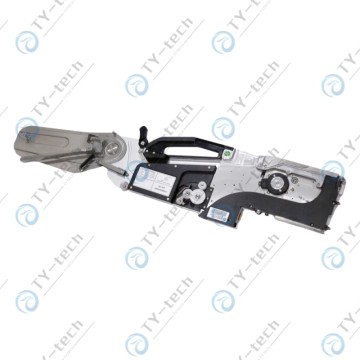
| 8mm - 56mm Tape Feeders | Pocket pitch deviation, irregular peel tension, tape jamming | Smart servo-motor electronic feeders, digital optical calibration rigs |
| SMD Vacuum Nozzles (0402 - 1005) | Vacuum leakage, tip chipping, reflectivity loss on 2D vision | Ceramic anti-static nozzle tips, automated ultrasonic wash & drying stations |
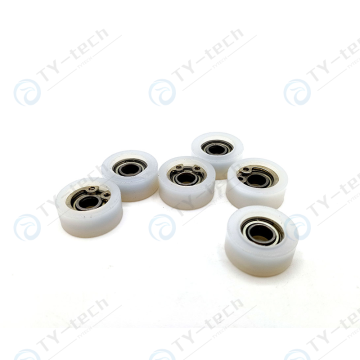
| Gantry Roller Guides & Sliders | Micro-vibration, tracking jitter, door access wear | Precision ground guide tracks, heavy-duty low-friction roller assemblies |
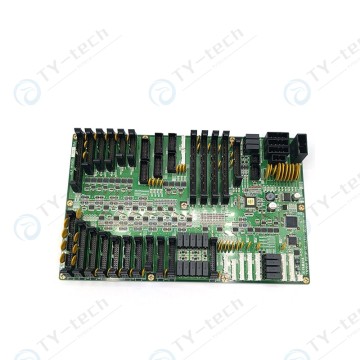
| Main I/O & Signal Interface Boards | Intermittent bus lag, signal loss, valve triggering latency | Gold-plated modular interface boards, real-time diagnostic bus monitoring |
Precision maintenance upgrades on surface mount equipment directly dictate yield feasibility across critical high-tech vertical markets.
Automotive electronics governed by AEC-Q100 and ISO 26262 standards tolerate zero defect escapes (0 PPM). SMT lines manufacturing autonomous driving radar boards and engine control units (ECUs) require 100% feeder-to-nozzle traceability. Upgraded wide-body tape feeders (such as 44mm/56mm formats) handle heavy inductive coils and power MOSFETs without vibrational displacement, guaranteeing structural joint integrity during reflow.
High-frequency RF transceivers feature ultra-dense component packaging where adjacent 0201/0402 capacitors sit within 100μm clearances. In these environments, nozzle tip concentricity errors or static electricity (ESD) discharge will instantly degrade high-frequency impedance or destroy sensitive gallium nitride (GaN) dies. Anti-static ceramic nozzles (such as Yamaha 211A/71A/203A series) ensure ESD-safe, millimeter-precise micro-placement.
Implantable defibrillators, neural monitors, and surgical robotics demand Class 3 IPC-A-610 electronic assemblies. Equipment maintenance upgrades ensure cleanroom compatibility, zero lubricating aerosol contamination, and deterministic placement forces, eliminating internal die cracking during high-velocity z-axis touch-down.
The integration of IoT sensors within modern feeder banks and placement heads allows maintenance teams to track real-time pick-retry ratios, nozzle blow-off pressure profiles, and feeder cycle counts. When a specific feeder slot exceeds a 0.08% mispick threshold, the intelligent line controller can automatically swap placement tasks to a redundant feeder lane or flag the feeder for automated cart maintenance before line stoppage occurs.
Investing in continuous feeder calibration, replacement PU transmission belts, and factory-certified main I/O signal boards extends the operational lifespan of legacy chip mounters (such as Yamaha YV100X, YG100, and YSM20R) by up to 10 to 15 years, achieving top-tier placement yields that rival brand-new platforms at a fraction of capital expenditure.
Offering professional SMT factory building advice and service
TY-Tech is the leading SMT factory solution provider in China, offering professional SMT factory building advice and service. We have 20 years of experience in SMT factories, offering full solutions for global clients with our great advantaged sources. Our core technology team members are well experienced in the SMT field, learning experience from top international chip mounters meanwhile increasing independent research and development. Currently, TY-Tech equipment is representative of high quality and has maintained absolute leading technology in the industry.
Over the years the company has been committed to improving technology, quality, and perfect service. TY-Tech makes a positive contribution to international standards, with an annual total capacity of 1,200 sets, and has passed ISO9001: 2000, ISO14000, CE, UL, RoHS, and other certifications. Full implementation of the IPD process, reliable design, and testing throughout the entire product life cycle.


TY-Tech's continued investment in research and development and great contribution has been unanimously recognized in the field. By the end of 2000, TY-Tech had declared more than 30 patents and software copyrights (including four invention patents), and actively involved in a number of national and industry standards. TY-Tech provides more advanced products and fast technical support for global customers, at home and abroad.
We pride ourselves on a customer-oriented business philosophy. Our professional support team works closely with clients from initial inquiry to after-sales service, providing tailored solutions, flexible OEM/ODM services, and efficient logistics coordination. We understand the diverse needs of different markets and are committed to building long-term, collaborative relationships with distributors, retailers, and brands worldwide.
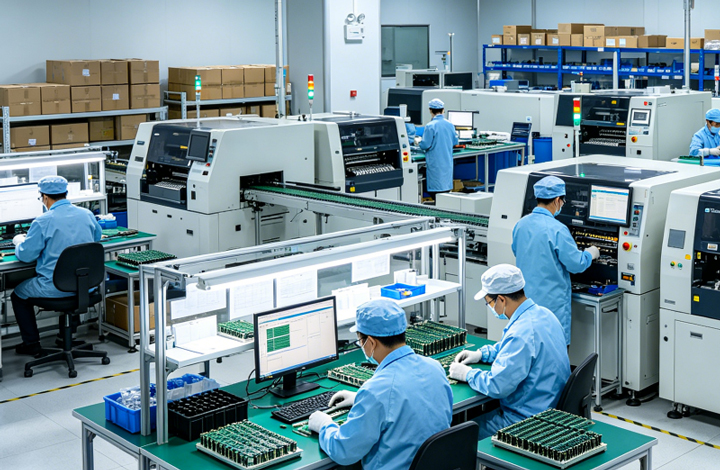

Welcome To Learn About Our Company
Sustainability and social responsibility are integral to our corporate ethos. We prioritize eco-friendly materials and energy-efficient designs, aiming to minimize environmental impact throughout our product lifecycle. Our operations comply with all relevant environmental and ethical regulations, reflecting our dedication to responsible business practices.
Ensure optimal factory uptime and continuous placement accuracy with our fully certified SMT feeders, micro-placement nozzles, conveyor drive belts, sliding door guides, and high-speed main logic boards compatible with Panasonic, Hanwha, and Yamaha chip mounters.
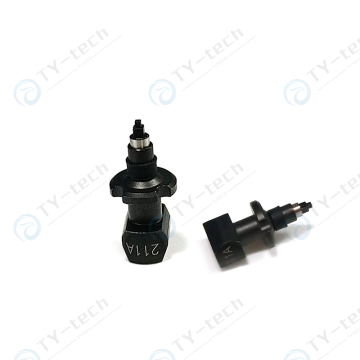
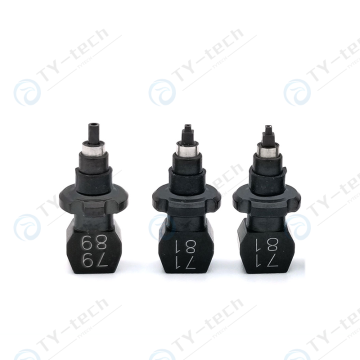
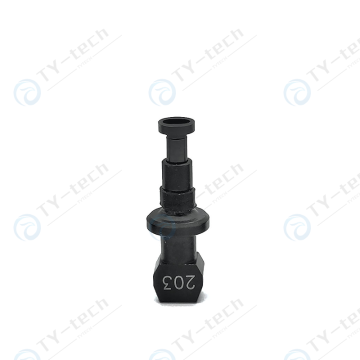
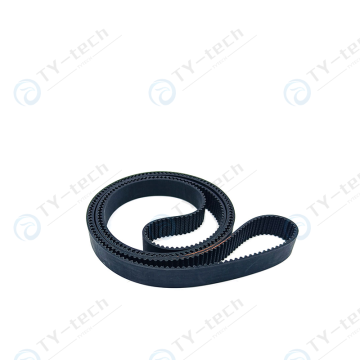
Achieving sustained six-sigma quality in modern surface mount operations requires a holistic synthesis of calibrated feeder mechanics, pristine vacuum nozzle physics, and stable logic control. By standardizing periodic feeder calibration schedules, utilizing automated nozzle washing with vision inspection, and sourcing original-spec wear components from experienced engineering partners like TY-Tech, electronic manufacturers worldwide safeguard high-volume assembly lines against catastrophic component mispicks, costly line shutdowns, and post-reflow solder defects.