Leave Your Message

Blog

How to Choose a Pick and Place Machine?

How to Choose a Pick and Place Machine?

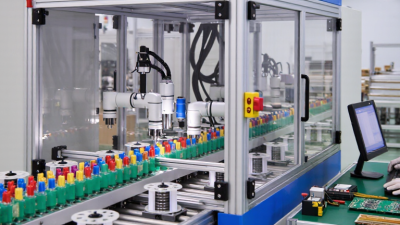
When you're choosing a Pick Place Machine, don’t just get hung up on placement speeds. Honestly, the right fit depends on the boards you’re working with, your components, how much you’re producing, and what your future product plans look like. You know that machine that looks amazing in the brochure? It might struggle with your tiniest parts or your longest boards. W. Edwards Deming—the manufacturing quality guy—famously said, “Quality is everyone’s responsibility.” That principle applies to picking equipment, too. Reliable results don't come from one shiny machine alone; they depend on the machine, the setup, the programming, and process control all working together. So when a supplier comes to you, ask them to run your actual board and component mix. Watch how the machine handles fine-pitch parts, feeder changes, and a routine setup—not just the best-case speed they like to show off. It’s the small details that end up counting. You’ll want to check things like placement accuracy, whether the feeder can keep up, how easy the software is to use, what maintenance looks like down the road, and if there’s decent local support. Also, don’t just take their performance claims at face value—ask for proof, and make sure they explain how those numbers were actually measured. Another thing you'll want to look at is the total cost of ownership, not just the sticker price. You've got to factor in feeders, software, training, spare parts, and even expected downtime when comparing options. If you can, talk to people who are actually running similar assemblies—not just sales reps. They'll often tell you about real-world quirks that no spec sheet is going to show you. And honestly, there's no one-size-fits-all machine. That super-fast model? It could be a pain if you're doing lots of low-volume changeovers. And the flexible all-rounder might struggle when you need serious output. Let’s be honest here—you’ve got bottlenecks, and pretending otherwise won’t help. As your product mix changes, those pain points are going to shift too, so it’s worth checking in on them from time to time. In this guide, we’ll walk through how to compare your options, separate real capabilities from marketing fluff, and choose a pick-and-place machine that actually fits what you’re producing day in and day out.
Read more »
Oliver By:Oliver - November 8, 2026
Why Choose an SMT Assembly Machine for PCB Assembly?

Why Choose an SMT Assembly Machine for PCB Assembly?

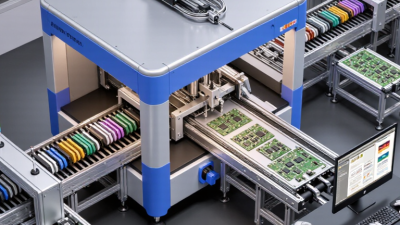
Sure, an SMT assembly machine can zip through tiny components at lightning speed, but let's be honest—speed alone doesn't make a PCB line dependable. You've gotta look at the whole picture: how accurate the placement is, whether the feeders are stable, if the nozzles are in good shape, and if the board's properly supported. In the real world, that one little 0402 resistor landing slightly off, or a connector that doesn't click in right, can lead to rework, wasted hours, and extra inspection steps. It's those tiny details that really matter, you know? So, when you're picking out equipment, it really comes down to the boards you're actually going to be working with. You've gotta think about things like component sizes, package types, and how big your boards are—not to mention what you expect to get out of the line and how often you'll be switching things up. I mean, sure, you want to look at placement accuracy and repeatability, but don't sleep on feeder capacity or how user-friendly the software is. And maintenance access? That's a big one that people often overlook. Plus, you need to make sure it plays nice with your printers and reflow ovens. Honestly, the best approach is to ask suppliers for specs and, if you can, set up a trial run with some boards that are representative of what you'll actually be doing. It's worth the extra effort, trust me. Honestly, just running a demo on an easy sample doesn't really give you the full picture. It could totally miss the hang-ups you get during changeover, or how finicky some parts are to handle. Honestly, the fastest machine isn't always the right fit. You need something that matches your product mix and the people who'll use it. But let's be real – equipment can't fix everything. If your solder paste is inconsistent or your nozzles are worn out, or the component data is a mess, even a solid system is going to have problems. That's something people tend to overlook. And here's a tip: don't forget to include setup, calibration, and operator training in your planning. The upfront price is one thing, but you should compare the total operating costs over time. When manufacturers actually take the time to evaluate things carefully, they end up with a much better sense of which SMT assembly machine to go with—and what they can realistically expect from PCB quality and throughput.
Read more »
Oliver By:Oliver - November 5, 2026
How to Choose Electric Machine Parts for Global Sourcing?

How to Choose Electric Machine Parts for Global Sourcing?

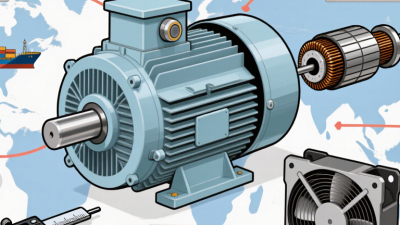
Electric machines are kind of the unsung heroes in factories and beyond—they run pumps, compressors, conveyors, and transport systems all over the world. But here’s the thing: how well they perform often comes down to the little stuff. Bearings, laminations, shafts, windings, seals, cooling assemblies—all those small components matter. So when you’re sourcing Electric Machine Parts globally, it’s not just about comparing unit prices. There’s a lot more to consider. Honestly, you need to back it up with real evidence—like material grades, dimensional control, thermal performance, and making sure production stays consistent. You know how the International Energy Agency says motor-driven systems gobble up more than half of all industrial electricity? The U.S. Department of Energy is on the same page, calling motor systems one of the biggest efficiency wins out there. That alone should tell you: picking components isn't just a procurement checkbox—it's an operational call. Sure, a cheap bearing might look great on paper. But when it fails? You're looking at a stalled production line, a damaged rotor, and a whole pile of rush replacement costs. And here's the thing—even tiny deviations can throw everything off. Honestly, reliable sourcing really comes down to two things: knowing exactly what you need and making sure your suppliers can actually deliver. As a buyer, you want to look beyond the glossy sales pitch—check their ISO 9001 certification, dig into inspection records, traceability, and any failure data you can get your hands on. Sure, IEC 60034 standards are helpful for getting everyone on the same page technically, but they're not a substitute for testing your actual application. And when you audit a supplier, don't just walk the floor; pay attention to heat-treatment controls, how they calibrate their equipment, what they check when materials come in, and even how they package the final product. Those details can tell you a lot. You know, the World Bank’s Logistics Performance Index also makes it pretty clear—international delivery reliability is all over the map depending on the market. And transit time? Honestly, it deserves just as much attention as factory price. Honestly? There’s no such thing as a perfect supplier scorecard. I’ve watched parts that looked great on paper totally fail just because nobody thought about humidity when packaging them. That awkward little detail? It matters more than you’d think. A sourcing strategy that actually works has to pull together engineering reviews, sample testing, total-cost analysis, and some serious contingency planning. And the best Electric Machine Parts supplier isn’t necessarily the one with the lowest price. It’s the one you can trust to keep meeting the drawing specs, document what they do, and show up when things get messy.
Read more »
Oliver By:Oliver - November 1, 2026
What Is a Pick and Place Machine?

What Is a Pick and Place Machine?

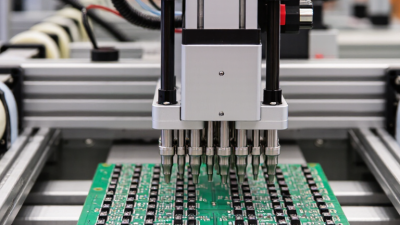
You'd think a pick-and-place machine just drops parts onto a board, right? Well, not exactly. On a typical electronics line, you've got a circuit board sliding underneath the placement head while all those tiny components get fed in one by one. The machine—that Pick Place Machine—has to position each little part just right before the board moves on to soldering. Honestly, from afar it looks deceptively simple. But it's really not. Everything matters: the size of the components, how fast the head moves, which nozzle you're using, even how the board itself is designed. Any one of those can throw the whole process off. So, why do these machines actually matter? It really comes down to scale. The International Federation of Robotics put out its World Robotics 2024 report, and it found that around 125,000 industrial robots were installed in electronics manufacturing worldwide in 2023. Now, that number includes all kinds of industrial robots—not just the pick-and-place ones. But even so, it’s a pretty clear sign of just how much electronics production leans on automation. A placement machine, though, has a more specific job. It uses feeders, nozzles, and vision systems to grab components and set them down exactly where they need to go on the circuit board — pretty neat, right? Getting to grips with a pick-and-place machine isn't just about the placement rate they advertise. Sure, a speedy machine sounds great, but it won't necessarily handle every mix of components well—and one tiny setup mistake can lead to the same components being placed wrong again and again. Little things like that make all the difference. So in this guide, I'll walk you through what a pick-and-place machine actually is, how its main systems work, and where it fits into surface-mount technology (SMT) production. We'll also look at the different types out there, what to consider when choosing one, and some common limitations you might run into. Look, specs are great and all, but when you actually get into real production, things can get way messier than the brochure lets on.
Read more »
Sophia By:Sophia - October 29, 2026
How to Choose the Right Electronic Parts Supplier?

How to Choose the Right Electronic Parts Supplier?

Picking the right Electronic Parts supplier? Yeah, it can seriously affect product quality, how smoothly deliveries go, and whether customers actually trust you. A cheap quote might seem tempting at first, but those hidden costs have a way of showing up later. Next thing you know, shipments are late, batches don’t match, and tech support is kind of useless—and that can throw your whole production line off track. If you want a supplier you can actually rely on, they should be able to show clear traceability for every single component. So ask for things like manufacturer details, lot numbers, inspection records, and up-to-date datasheets. Certificates are important, sure—but they should back up real verification, not take its place. Before you commit to a big order, get samples first. And test them the way they'll really be used: temperature, voltage, mechanical stress, all of it. A good, professional supplier won't dodge the hard questions—they'll walk you through tolerances and known limitations. Honestly, you can tell a lot about a supplier from how they communicate. Do they give you straight answers, realistic lead times, and actual documented corrective actions? That's what you want to see. It's also worth looking at their quality procedures, what the warehouse is like, how they package things, and how they manage stock. If you can, set up an audit—remote or on-site. Good suppliers will talk confidently about authorized distribution, counterfeit prevention, and change notifications. That said, no supplier is perfect. None of them are. Even seasoned teams can get demand wrong or overlook a missing piece of documentation—it happens. And that's a risk worth talking about honestly. So for critical components, build in some backup options, especially anything with long lead times. When you're weighing suppliers, look at technical chops, reliability, financial health, and after-sales support as a package, not one by one. The best pick is almost never the cheapest quote. It's the supplier who consistently looks after your product, your timeline, and your reputation.
Read more »
Emma By:Emma - October 24, 2026
How to Source PCB Parts Globally in 2026?

How to Source PCB Parts Globally in 2026?

Global PCB production is becoming more connected, yet sourcing remains uneven. In 2026, buyers must evaluate availability, traceability, technical fit, and total landed cost together. Pcb Parts may cross several borders before reaching a factory line. A connector can leave Shenzhen, pass through Singapore, and arrive in Mexico with new documentation requirements. The World Semiconductor Trade Statistics forecast semiconductor sales of approximately $700.9 billion in 2025 and $760.7 billion in 2026. That growth suggests stronger demand for components, but it does not guarantee stable supply. IPC’s industry research also continues to emphasize capacity, workforce, and regional resilience across electronics manufacturing. As IPC President and CEO John W. Mitchell has stated, “The electronics industry is the foundation of the modern economy.” His observation explains why a small sourcing error can affect medical devices, vehicles, and industrial controls. Reliable sourcing begins with evidence. Compare authorized distribution, factory certifications, audit records, lifecycle status, and lead-time history. Request date-coded samples, not only attractive quotations. Check moisture-sensitive packaging before approving shipment. A low price is not a complete strategy. No dashboard is perfect. Forecasts change. Suppliers sometimes overpromise. Human judgment still matters. Buyers should document exceptions and review them with engineering, quality, and logistics teams. The strongest 2026 sourcing plans will combine regional diversification with disciplined verification. They will also admit uncertainty, instead of hiding it behind impressive spreadsheets. That practical honesty can protect production schedules, product quality, and customer trust.
Read more »
Emma By:Emma - October 20, 2026
2026 Top PCB Assembly Machine Types for Global Buyers

2026 Top PCB Assembly Machine Types for Global Buyers

Global buyers are heading into 2026 with pretty sharp expectations—speed, traceability, flexibility, and energy control are all on the list. And a PCB Assembly Machine? It’s not just about placement speed anymore. Feeder stability, vision accuracy, software connectivity, changeover time, and service support can make or break whether a line runs reliably. Ray Prasad—known SMT process expert and author of Surface Mount Technology: Principles and Practice—has kept stressing process control. His point, often put simply, is this: “A machine cannot compensate for a weak process.” That warning still holds up for purchasing teams. A fast placer can still crank out defects if stencil design, solder paste handling, or inspection discipline gets ignored. This guide looks at the main PCB Assembly Machine types international buyers can choose from in 2026. We’re talking pick-and-place machines, solder paste printers, reflow ovens, inspection systems, and selective soldering equipment. Each type fits a different production reality. A compact line might be great for prototypes and frequent product changes. A high-volume factory may need modular placement, automated material storage, and closed-loop inspection. The details matter. Buyers should compare real throughput—not just the numbers in a brochure. Check sample boards, go over maintenance records, and test software integration before signing anything. Price matters, sure, but downtime can quietly cost way more. And some recommendations may need tweaking as component sizes, labor conditions, and regional support networks shift. No single machine fits every factory. A smart decision starts with your product mix, operator skill, and a five-year production plan.
Read more »
Emma By:Emma - October 14, 2026
What Is a PCB and What Are Its Parts?

What Is a PCB and What Are Its Parts?

Okay, so a printed circuit board—PCB for short—is basically the structural and electrical backbone inside tons of modern products. It holds components, routes signals, and sends power around through copper paths that were designed very carefully. In a smartphone, those paths can be thinner than a human hair. In industrial gear, though, they’ve got to handle heat, vibration, and nonstop operation. Getting a handle on Pcb Parts helps engineers, buyers, technicians, and even students figure out how a board actually works. And yeah, industry data shows why this stuff matters. Fortune Business Insights put the global PCB market at about USD 89.7 billion in 2023. Their 2024 analysis also sees more growth ahead through 2032, pushed by electric vehicles, medical electronics, telecom, and data centers. IPC, through its North American PCB Statistical Program, tracks shipment and booking trends for rigid, flexible, and multilayer boards. These reports show a pretty demanding market. But market size alone? It doesn’t really explain reliability. Design quality still comes down to the details. Small details matter. For real. This guide walks through the main PCB parts—substrate, copper layers, solder mask, silkscreen, vias, traces, pads, and mounted components. It also looks at how resistors, capacitors, integrated circuits, connectors, and power devices interact on the board. A circuit board might just look like a flat green panel, but every drilled hole and copper region has a job. Sometimes definitions get a little blurry between a board feature and a component. That’s worth admitting. To really understand it, you need to look at drawings, manufacturing standards, inspection results, and actual assemblies—not just memorize names. Tying things back to IPC standards and established industry reports gives the discussion a stronger technical footing.
Read more »
Oliver By:Oliver - October 10, 2026
What Are the Top 10 Surface Mount Machine Manufacturers?

What Are the Top 10 Surface Mount Machine Manufacturers?

Picking the right Surface Mount Machine manufacturer? That decision can affect a lot: production speed, placement accuracy, maintenance costs, and how well the line holds up over time. This guide looks at ten companies that often come up in these conversations: ASMPT, Fuji Corporation, Panasonic Connect, Yamaha Motor Robotics, JUKI Automation, Hanwha Semitech, Mycronic, Universal Instruments, Europlacer, and Saki Corporation. Each one has its own strengths. Some are all about high-speed placement. Others lean toward flexible lines, inspection, software, or smaller-batch production. Michael Ford, Senior Director of Emerging Industry Strategy at Aegis Software, once put it like this: “The smart factory is not a machine; it is a connected production system.” And honestly, that point matters. A fast Surface Mount Machine can still struggle if feeders, material control, inspection, and factory software aren't talking to each other. On the floor, operators usually notice the little things first: feeder calibration, changeover time, nozzle access, error messages, and how far they have to walk between workstations. Those everyday details often matter more than a flashy spec sheet. In this comparison, manufacturers are judged on placement capability, line integration, service coverage, software support, user experience, and application range. But public info doesn't always give you a perfect apples-to-apples comparison. A lot of performance claims depend on component mix, board design, operator skill, and the realities of a given factory. That limitation is worth keeping in mind. A ranking can help guide your research, sure, but it can't replace a production trial, reference checks, and a careful total-cost analysis. The best fit for a large automotive plant might be totally different from what works for a medical electronics producer or a contract manufacturer dealing with frequent product changes.
Read more »
Emma By:Emma - October 7, 2026
China Top PCB Fabrication Tools Suppliers for Global Buyers

China Top PCB Fabrication Tools Suppliers for Global Buyers

When it comes to making electronics on a global scale, you really need reliable, measurable, and well-supported PCB fabrication tools. You know, it’s not just about flashy brochures and slick marketing—buyers want equipment that can hold up in real production environments, facing heat, dust, and tight schedules. It’s got to perform day in and day out. In this guide, we’re looking at some of the top players out there—like Atotech, KLA, Schmoll Maschinen, LPKF, and Manz. They offer everything from drilling and laser imaging to plating, etching, lamination, inspection, and automation. Each of these areas can seriously impact your yield. For example, a drilling machine might be the key to perfect hole walls, while an AOI system could catch registration problems before your boards even leave the factory. Likewise, the plating line’s consistency can make or break the copper thickness across large panels. You know what? Dr. Hayao Nakahara, a well-respected analyst in this space, once said, “The PCB industry is a barometer of the electronics industry.” And honestly, that still rings true. Market demands shift quickly, but your processes need to stay disciplined. That’s where trustworthy PCB fabrication tools come into play—they help manufacturers keep things consistent with repeatable settings, traceable data, and skilled operators. Of course, nobody’s perfect. Even a machine that ticks all the boxes on specs can still disappoint during everyday use. Delays in integration, spare parts running out, software issues, and local support—these often don’t get as much attention as the initial price tag. When shopping around, it’s a smart move to check installation histories, factory acceptance test results, how fast support responds, and what other customers are saying. And don’t just look at sample images—make sure you actually check out real panels if possible. This overview is definitely useful, but it’s not the final word. Suppliers change, regional support varies, and after a site visit or a trial run, you might want to rethink some of your conclusions. The key is for buyers to do their homework—combine supplier info, independent checks, and hands-on testing—before locking in equipment for the long haul in PCB manufacturing.
Read more »
Sophia By:Sophia - October 2, 2026
7 Tips for Choosing the Best PCB Machines

7 Tips for Choosing the Best PCB Machines

Picking the right Pcb Machines can really make or break your production in terms of quality, speed, and long-term costs. But here’s the thing—you can't just go by the sticker price or shiny specs. A machine might look pretty awesome during a demo, but once it's sitting beside your actual assembly line, things could be quite different. Things like board size, component density, material types, throughput, and even your operator’s skill all come into play. Sometimes, it’s the little details that end up making the biggest difference. So, I’ve put together seven practical tips to help you evaluate equipment more confidently. We’re talking about things like placement accuracy, feeder stability, soldering control, inspection features, how well the software integrates, ease of maintenance, and the support you get from suppliers. Honestly, these factors impact your day-to-day results way more than those glossy brochures suggest. Wise buyers don’t just guess—they run trial tests, check service histories, review training options, and confirm spare parts are readily available. They also look into applicable IPC standards and their own internal quality requirements before making a call. A good supplier should be upfront about what their machines can’t do, rather than promising perfect performance all the time. Of course, some decisions are tricky. For instance, a cheaper machine might be just right for a small shop, but buying an ultra-fast model when your demand is pretty steady might just be throwing money away. You also need to consider energy consumption, noise levels, how much space it takes up, and whether you’re planning to expand later on. A spreadsheet can't catch every practical detail—like how tricky a complex interface might be for your operators, or whether maintenance requires remote support from far away. It’s worth having honest chats about those possibilities. By taking a close look at real workflows and concrete proof, you can pick a Pcb Machine that helps you produce reliably day after day—not just a shiny new toy that’s great until it isn’t. The best choice probably isn’t the fanciest or most expensive one. It’s the one that truly fits your work, your team, and the realities you face every day.
Read more »
Emma By:Emma - September 29, 2026
Top PCB Board Making Machine Manufacturers in China

Top PCB Board Making Machine Manufacturers in China

China’s PCB equipment scene is pretty diverse — you’ve got the well-established manufacturers alongside smaller, specialized workshops. Each one tends to serve different production needs. For example, a Pcb Board Maker Machine can handle a bunch of tasks like drilling, routing, imaging, inspection, or even combine several steps into one streamlined workflow. Choosing the right machine really depends on how complex your boards are, how much you need to produce, and how well the equipment will fit into your existing production line. No one-size-fits-all answer here, for sure. Now, just to keep things transparent — here, Lin Wei is basically a made-up composite character, representing a PCB process engineer. Not a real person. So, when I say, “A machine earns its spot when it maintains accuracy over real production shifts, not just during a showroom demo,” that’s just a general idea, not a quote from anyone. It’s more of a guiding principle. If you're shopping around, make sure to ask for data on how consistent the machine's performance is, see some sample boards, understand what’s involved in maintenance, and get clear info about the service you're signing up for. A good demo is helpful, but proof of actual production performance is what really counts. This guide focuses on the leading Chinese manufacturers, based on real-world criteria like the machine’s capabilities, customization options, operator support, and after-sales service. Sure, company claims can sound pretty impressive on paper, but the real test is how the equipment performs in actual conditions — which often depends on how it’s configured and the process setup. Those details can easily be missed if you’re not paying close attention. So, it’s smart to compare similar specs head-to-head and, if possible, request a trial run to see how it performs in your own production environment. No supplier is automatically the best — even top-notch equipment needs proper setup, training, and follow-up to really deliver the goods.
Read more »
Sophia By:Sophia - September 25, 2026
What Are the Top 10 SMD Tools for Global Buyers?

What Are the Top 10 SMD Tools for Global Buyers?

Picking the right Smd Tools can really make or break your production line. If you choose poorly, you might end up wasting hours on rework, while the right tools keep things running smoothly. Lots of global buyers compare everything—from soldering irons and hot air stations to tweezers, microscopes, cutters, and inspection meters. And honestly, each of these tools plays a big role in how accurate placement is, how well heat is controlled, operator safety, and how quick repairs can be made. In this guide, we’ll look at ten practical picks for international procurement teams. We’ll cover stuff like maintaining stable temperatures, ESD protection, easy access to spare parts, warranty service, and calibration needs. Big brands like Hakko, Weller, JBC, Fluke, and Kurtz Ersa each bring their own strengths—some are great for professional workshops, others better for quick repairs. For example, a solid multimeter can help verify quality, while a good microscope lets you spot lifted pads, solder bridges, or damaged leads. Little details often make a huge difference. But performance isn’t everything. Buyers also need to consider voltage compatibility, regional service options, the quality of documentation, and the total cost of ownership. For instance, products that follow IEC 61340-5-1 standards can help cut down electrostatic risks, but that only works if your entire workstation is set up properly. There’s no one-size-fits-all ranking here either—what matters most depends on your shop’s needs. A small repair bench might prioritize portabilit,y while a high-volume factory may care about cycle times and easily replaceable parts. Sometimes, tools that look amazing on paper turn out to be disappointing in real-world use, which is worth keeping in mind. What we’re offering here is a balanced starting point—not a final verdict. In the end, you gotta do your own testing. Compare samples, listen to operator feedback, and review long-term maintenance history before dropping a big order. The best Smd Tools aren’t necessarily the most expensive—they're the ones that give consistent results, safe handling, and reliable support in your actual working environment.
Read more »
Sophia By:Sophia - September 22, 2026
2026 Best Circuit Board Equipment for Global Buyers?

2026 Best Circuit Board Equipment for Global Buyers?

Choosing the best circuit board equipment for 2026 isn’t just about comparing prices. Sure, cost matters, but there’s a lot more to consider. Global buyers really need to think about how stable the production is, how good the service support is, software compatibility, and how well the process can be controlled and measured. A machine that’s faster isn’t always the better choice—sometimes, it’s the reliability that really counts. Industry reports like IPC’s Global Sentiment of the Electronics Industry often highlight how demand is shifting, capacity is under pressure, and the supply chain remains uncertain. Similarly, SEMI’s World Fab Forecast sheds light on how regional investments and semiconductor capacity can impact availability, lead times, and technical support. When it comes to PCBs specifically, Prismark’s PCB Industry Forecast provides helpful insights into regional growth, substrate demand, and tech migration trends. These reports give solid industry signals, but at the end of the day, they don’t replace checking things directly on the factory floor. When making actual purchasing decisions, it all starts with the PCB itself. Think about copper thickness, layer counts, component density, drilling tolerances, and your monthly production volume. The production line might include stuff like PCB drilling machines, laser direct imaging, solder paste printers, pick-and-place equipment, reflow ovens, automated optical inspection, and electrical testers. Each piece of equipment needs to match your specific requirements—things like IPC standards (IPC-A-610, IPC J-STD-001, IPC-2221) where relevant. It's a smart move to ask for sample runs, check maintenance logs, see software demos, get plans for spare parts, and understand how quickly support will respond. Training during installation is super important too, especially when language barriers and time zones come into play. Also, don’t get blinded by the lowest quote—it might end up costing you more with downtime, calibration issues, or weak local support down the line. This guide is meant to help global buyers compare practical options, but remember—no one-size-fits-all ranking exists. The real proof is in how it performs on actual boards, under real production conditions, with your specific setup in mind.
Read more »
Emma By:Emma - September 18, 2026
How to Choose the Best PCB SMT Machine in 2026?

How to Choose the Best PCB SMT Machine in 2026?

Picking out the best PCB SMT machine in 2026 isn't just about looking at how fast it can place components. I mean, a machine could be super quick but still end up causing costly mistakes, long changeover times, and unpredictable production runs. The key things to consider actually include the size of your boards, the variety of components you'll be handling, the capacity of feeders, how much room you have in your factory, and even the skill level of your operators. And hey, don’t forget about your future orders—that part often gets overlooked but is pretty crucial! Michael Ford, who’s the Senior Director of Emerging Industry Strategy at Aegis Software, once said, “The real power of automation comes from connecting machines, people, and data.” That really sticks, especially when you're trying to choose a modern PCB SMT machine. A decent system should be able to share production data with inspection equipment, material control software, and manufacturing execution systems. Plus, it should let you trace every single board easily. A bright touchscreen is helpful, sure, but honestly, that’s not the whole story. When you’ve actually been through the trenches of production, it’s the little things that matter. Replacing feeders shouldn’t feel like a chore—it should be straightforward. Nozzles need to be easy to check after a long shift—that’s just common sense. And when an alarm goes off, it’d be great if it explained what’s wrong without forcing you to dig through manuals for ages. Maintenance access is another big one. A machine might save seconds during placement, but if servicing takes hours, well, that kind of defeats the purpose. That’s usually where comparison charts tend to oversimplify things. Honestly, there’s no one-size-fits-all answer here. A smaller manufacturer might value quick setup and flexibility, while a bigger factory focused on high-volume runs might prioritize uptime and synchronized lines. Even the most experienced teams can sometimes misjudge what their actual product mix will be, so it’s wise to consider all these factors. That’s why this guide looks at aspects like performance, accuracy, flexibility, support, energy efficiency, integration, and overall costs of ownership. It’s about making practical judgments, not trying to predict the future perfectly. And remember, as your production evolves, your needs might shift—that’s totally normal.
Read more »
Emma By:Emma - September 14, 2026