
- Home
- Products
- About Us
- Application
- FAQ
- News
- Contact Us
Leave Your Message
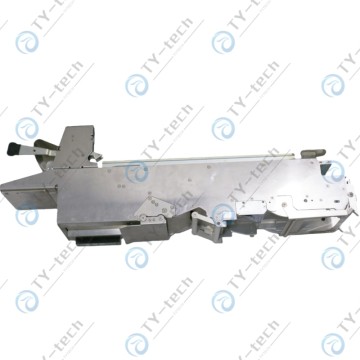
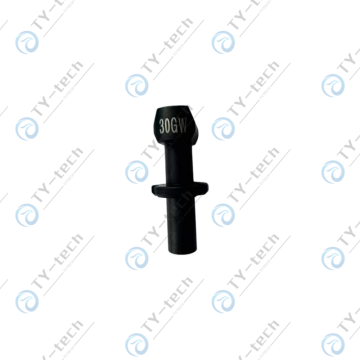
Continuous feeding stability relies on precision-matched suction rods, ergonomic unlocking mechanics, retention springs, and tape guide covers in 5G SMT lines.
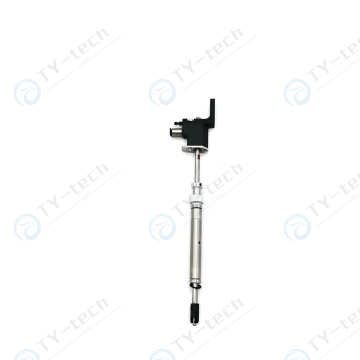
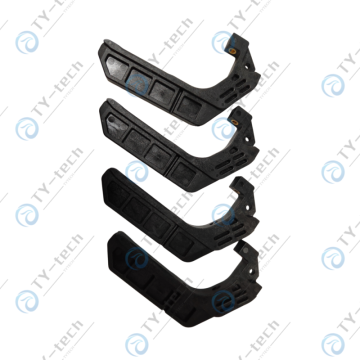
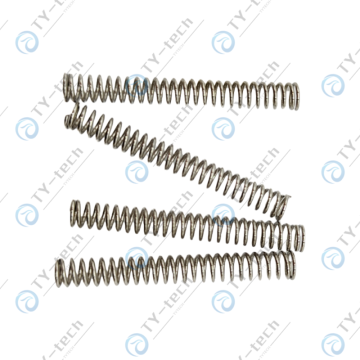
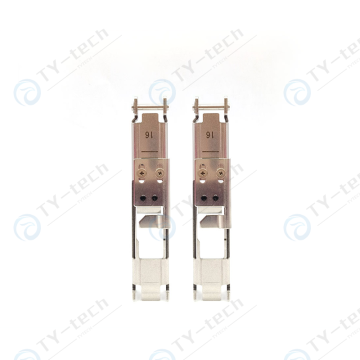
Modern 5G telecommunication infrastructure relies on Active Antenna Units (AAU), Baseband Units (BBU), and Remote Radio Units (RRU) that operate at unprecedented millimeter-wave and sub-6GHz frequencies.
The manufacturing landscape for 5G communication base station boards has entered an era of extreme miniaturization coupled with intense functional integration. Unlike commercial consumer electronics, base station printed circuit board assemblies (PCBAs) feature massive multi-layer substrates made of high-frequency ceramic hydrocarbons, polytetrafluoroethylene (PTFE), and low-loss FR-4 laminates. These boards frequently exceed 500mm x 400mm in physical dimensions, incorporating over 15,000 to 25,000 components per board. From ultra-sensitive 0201 (0603 metric) passives and micro-RF filters up to heavy-duty power management ICs and GaN power amplifier modules, surface mount technology (SMT) equipment operates under tight tolerances where minor feeder tape pitch flutter causes costly component loss or defective joints.
In this demanding telecommunication production ecosystem, the Yamaha Pneumatic Feeder (notably the battle-proven SS and ZS series architectures) stands as an indispensable workhorse. While motorized electronic feeders are common, the mechanical robustness, cost per channel, resilient pneumatic cycle recovery, and rapid indexing cadence of Yamaha pneumatic feeders make them the foundation for high-volume 5G base station manufacturing lines worldwide. Their capacity to withstand 24/7 continuous indexing under high factory air supply stability ensures uninterrupted tape progression, mitigating the risk of micro-jamming during high-speed pick and place cycles.
Dual-piston pneumatic stroke control guarantees instant mechanical feedback, eliminating tape backlash and maintaining pocket centering repeatability within ±0.03mm.
Conductive ground paths and antistatic tape guides dissipate ESD hazards instantly, shielding sensitive Gallium Nitride (GaN) and LDMOS power amplifier dies.
Seamless pitch transitions between 2mm, 4mm, 8mm, and 12mm tape increments permit rapid reel swaps across diverse high-mix 5G macro and micro base station designs.
An in-depth structural inspection reveals how pneumatic mechanics counter tape stretching, vibration jitter, and pick offset in massive MIMO antenna boards.
In massive MIMO (Multiple Input, Multiple Output) antenna boards, hundreds of antenna dipole transceiver channels are arrayed in parallel. Every channel requires identical phase-shifting filters, discrete RF capacitors, and precise tuning resistors. A placement error or component pickup angular deviation (theta-axis offset) forces automated optical inspection (AOI) rejection and manual touch-up that harms microwave signal integrity.
Yamaha pneumatic feeders utilize a mechanical ratchet-and-pawl gearing mechanism operated by an internal pneumatic piston chamber. When the mounter placement head reaches the pickup coordinate, pneumatic air pressure activates the indexing lever with uniform torque. The mechanical stroke length is rigidly limited by hardened steel stops, ensuring zero cumulative pitch error across a 10,000-component reel. This pneumatic indexing cycle prevents the micro-stretching of embossed plastic carrier tapes or paper tapes, preserving pocket pocket-depth fidelity.
Moreover, the integration of robust clamp covers, such as the Yamaha SS16mm cover plate and ZS series rear locking handles, maintains consistent top-film peel tension. Controlled peeling tension is vital: excessive pull force causes tiny 0201 chip capacitors to "bounce" inside the pocket cavity, leading to pickup tombstones, sideways standing components, or vacuum misfires.
| Parametric Dimension | Yamaha Pneumatic Standard | 5G SMT Board Impact |
|---|---|---|
| Tape Indexing Repeatability | ±0.025 mm | Guarantees 0201 / 0402 component centering for RF filter networks |
| Operating Air Pressure | 0.49 - 0.59 MPa (Clean Dry Air) | Uniform piston thrust preventing tape slippage or gear skips |
| Applicable Tape Formats | 8mm, 12mm, 16mm, 24mm - 104mm | Covers miniature capacitors up to shielded BBU inductors |
| Peeling Angle Stability | Controlled 45° - 60° Angle | Eliminates component "pop-out" during high-speed feeder indexing |
| Mean Cycles Between Jam (MCBJ) | > 250,000 cycles | Guarantees 24/7 continuous uptime on 5G massive AAU lines |
From transceiver arrays to power switching fabrics, high-frequency base stations depend on stable component presentation.
Featuring 64T64R or 32T32R MIMO architectures, AAU boards host thousands of identical RF surface mount passives. Yamaha SS8mm and ZS8mm pneumatic feeders provide rapid component presentation, maintaining pick speeds up to 45,000 components per hour (CPH) per machine module without jamming.
5G BBU boards carry complex digital signal processors, FPGAs, and high-speed memory interfaces. The integration of 12mm and 16mm Yamaha pneumatic tape feeders ensures heavy decoupled inductors, high-current capacitors, and shielding cages are placed with rock-solid repeatability.
Power conditioning circuits for 5G macro base stations handle up to 1500W of continuous load. Yamaha pneumatic feeders handle deep-pocket embossed plastic carrier tapes, supplying heavy copper-core chokes and high-voltage ceramic capacitors without tape snagging.
One of the primary benefits observed in high-speed 5G electronics manufacturing plants is the resistance of pneumatic feeder banks to electrical interference. High-power RF testing equipment and electromagnetic test benches located nearby in modern telecommunications SMT lines can produce high electromagnetic fields (EMF). Pneumatically actuated feeders operate purely via air pressure cylinders and hardened mechanical lever linkages, rendering them immune to ambient EMI that might disrupt sensitive microcontroller circuits found inside low-tier electronic feeders.
Offering professional SMT factory building advice and service
TY-Tech is the leading SMT factory solution provider in China, offering professional SMT factory building advice and service. We have 20 year experience about SMT factories, offering full solutions for global clients with our great advantaged sources. Our core technology team members are well experienced in SMT filed, learning experience from top international chip mounters meanwhile increasing independent research and development Currently TY-tech equipment is representative of high quality, has maintained absolute leading technology in the industry.
Over the years the company has been committed to improving technology, quality and perfect service. TY-tech makes a positive contribution to international standard, the annual total capacity of 1200 sets, passed the ISO9001: 2000, ISO14000, CE, UL, RoHS and other certifications. Full implementation of the IPD process, reliable design and testing throughout the entire product life cycle.


TY-tech continued investment in research and development and great contribution has been unanimously recognized in the field. By the end of 2000, TY-tech has declared more than 30 patents and software copyrights (including four invention patents), and actively involved in a number of national and industry standards. TY-tech provides more advanced products and fast technical support for global customers, at home and abroad.
We pride ourselves on a customer-oriented business philosophy. Our professional support team works closely with clients from initial inquiry to after-sales service, providing tailored solutions, flexible OEM/ODM services, and efficient logistics coordination. We understand the diverse needs of different markets and are committed to building long-term, collaborative relationships with distributors, retailers, and brands worldwide.


Welcome To Learn About Our Company
Sustainability and social responsibility are integral to our corporate ethos. We prioritize eco-friendly materials and energy-efficient designs, aiming to minimize environmental impact throughout our product lifecycle. Our operations comply with all relevant environmental and ethical regulations, reflecting our dedication to responsible business practices.
Through stringent quality inspection protocols, precision pneumatic calibration stands, and comprehensive traceability, TY-Tech delivers replacement feeder assemblies, wear components, and complete SMT integration services that satisfy the exacting quality benchmarks required by tier-1 telecom manufacturers.
Systematic feeder calibration, wear component renewal, and air pressure stabilization maximize pick-and-place uptime.
In high-speed 5G communication base station board manufacturing lines, a feeder defect does not merely discard a single passive component; it threatens to interrupt an entire high-speed SMT line running complex dual-lane or modular systems like the Yamaha YS, YSM, or Z:TA series. Contract manufacturers (CMs) producing 5G telecom hardware implement stringent preventive maintenance (PM) schedules to keep pneumatic feeders operating at peak performance.
Key maintenance priorities encompass:
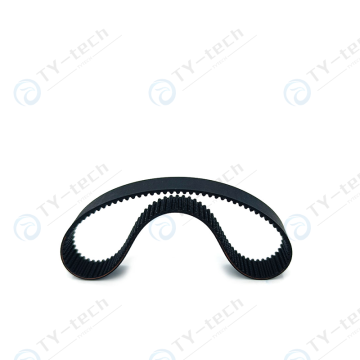
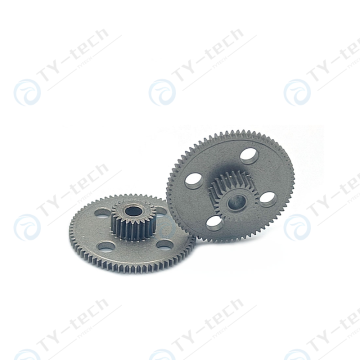
Browse our complete range of certified replacement feeders, drive belts, nozzle components, and mechanical locking assemblies for Yamaha and compatible platforms.
Common questions regarding Yamaha pneumatic feeder integration, pitch accuracy, and base station PCBA throughput.